Business cases delivered through IBF International Institute for Better Futures, and international projects I have led and contributed to across the Sustainable Development Goals, for development banks, United Nations agencies, governments, universities and companies. Click a country on the map or choose a region.
Click a country on the map, or choose a region, to see the business cases and international projects delivered there. Select any cover to read more.
Asia Pacific
Business cases 6
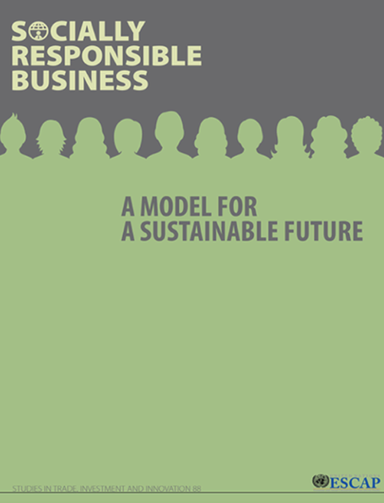
A Model for Sustainable Value Creation
UNESCAP Business Advisory Council · ThailandClient: ESCAP Business Advisory Council, with the Investment and Enterprise Development Section of UNESCAP. 2017.
What we delivered: the Sustainable Value Creation Business Model, conceptual and practical sustainable business frameworks for corporations and government officials in Asia and the Pacific, capacity building materials for corporate and government leaders, and an SDG impact assessment mainstreamed across the project.
Participant Stakeholders: UNESCAP and the United Nations University- Institute for the Advanced Study of Sustainability UNU-IAS
Sustainability Leaders: Isabel B. Franco, Ph.D; Dr. M. Abe (Japan)
Impact: Today’s global business environment is radically changing to address the environmental and social challenges of our time. The increasing threat of severe climate change, as well as the widening of gaps between socioeconomic groups and frequent social unrests are pressuring businesses to change normative management practices and operations towards development that is both inclusive and sustainable. While shareholders have a vested interest in financial economic returns, stakeholders are more broadly interested in, or concerned with, business’ objectives, policies and operations which may impact global sustainability. Accordingly, this publication aims to increase the knowledge of policymakers and corporate leaders on the Socially Responsible Business (SRB) approach. Analysis of the foundations, principles, practices and enablers of SRB reveals the key role this approach can play in promoting inclusiveness and sustainability, and ultimately, in contributing to the SDGs. A deeper understanding of SRB will assist both public and private sectors to integrate a greater level of SRB practices into business operations of small and medium-sized enterprises (SMEs) as well as large enterprises and transnational corporations (TNCs). Finally, organizations that have implemented these practices demonstrate how the SRB approach can foster the global change necessary for a sustainable future.
Click on the image to access project’s outcome
ESG at a Country Level, Pakistan
Asian Development Bank · PakistanClient: Asian Development Bank.
Challenge: Pakistan needed a common national approach to environmental, social and governance (ESG) practice, so that companies could manage and disclose ESG issues credibly and investors, regulators and government could rely on comparable information.
What we delivered: country level ESG guidelines for Pakistan, developed in consultation with national stakeholders across government, market institutions and the private sector, together with ESG training modules for corporate executives and government officials.
Why it matters: the guidelines give the country a national reference point that aligns corporate ESG governance and disclosure with international practice, and the training builds the capacity of companies and public institutions to apply it.
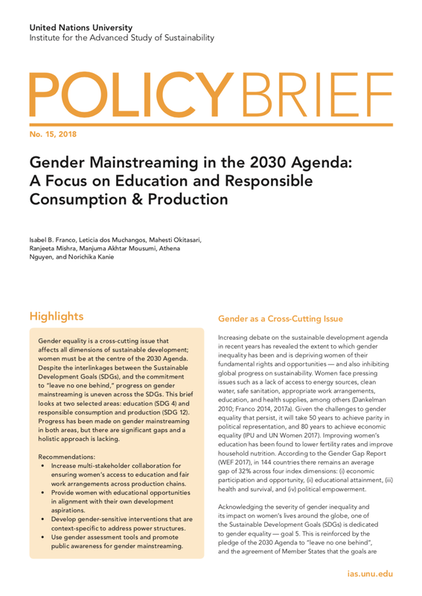
Gender Mainstreaming in the 2030 Agenda
United Nations University · JapanClient: United Nations University, Institute for the Advanced Study of Sustainability.
What we delivered: a policy brief on gender mainstreaming in education (SDG 4) and responsible consumption and production (SDG 12), with advice on multi stakeholder collaboration, education matched to women’s own goals, gender sensitive interventions and gender assessment tools.
Sustainability Leaders: Dr. Isabel B. Franco, L. Sarmento Dos Muchangos (Mozambique), M. Okitasari (Indonesia), R. Mishra (India), M. Mousumi, (Bangladesh) A. Nguyen (Australia).
Participant Stakeholders: United Nations University – Institute for the Advanced Study of Sustainability; BRAC University Bangladesh
Impact: Gender equality is a crosscutting issue that affects all dimensions of sustainable development; it is clear that women must be at the centre of the 2030 Agenda. Despite the clear links between the Sustainable Development Goals (SDGs), and the commitment to “leave no one behind,” progress on gender mainstreaming seems to be uneven across the SDGs. This article specifically analyses the links between Gender Equality (SDG 5) and both Education (SDG 4), and Responsible Consumption and Production (SDG 12).
Although, improving women’s education has been found to lower fertility rates and improve household nutrition according to scholarly literature, it will take 50 years to achieve gender parity in political representation, and 80 years to achieve economic equality. Furthermore, according to the Gender Gap Report, in 144 countries there remains an average gap of 32% across the four index dimensions: (i) economic participation and opportunity, (ii) educational attainment, (iii) health and survival, and (iv) political empowerment.
Placing women at the center of the 2030 Agenda requires stronger links between the SDGs and a real commitment to investing wisely in women’s capacities to cope with pervasive sustainability challenges. Whilst we have seen remarkable advances in gender parity in education, the overall progress towards achieving SDG 5 has been less impressive. Evidently efforts have been made to connect goals 4 and 5, resulting in more equitable and quality learning, creation of lifelong opportunities, and women’s empowerment for economic. There is also evidence to suggest a link between goals 5 and 12, for example, when women have secure land rights, production is more sustainable and efficient. But few attempts have been made to connect these two areas in practice.
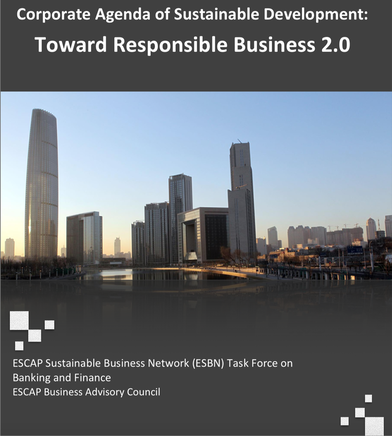
Corporate Agenda of Sustainable Development: Toward Responsible Business 2.0
Industrial and Commercial Bank of China, with UNESCAP · China and Asia Pacific
Client: Industrial and Commercial Bank of China (ICBC), with UNESCAP and the United Nations Business Advisory Council.
What we delivered: corporate sustainability guidelines for the corporate sector and a sustainable business model, Responsible Business 2.0, that bridges corporate social responsibility, corporate sustainability and corporate governance.
Impact: the model helped many companies across Asia and the Pacific align with the United Nations and the UN Global Compact, and improve their corporate sustainability practices and sustainable business models.
Participant Stakeholders: UNESCAP, EBAC (ESCAP Business Advisory Council), Industrial and Commercial Bank of China (ICBC) (Asia) Limited, Global Compact Network, Natixis, KPMG, Macquarie Infrastructure and Real Assets, Credit Suisse Group AG.
Sustainability Leaders: Isabel B. Franco; M. Abe (Japan); D. Rawther (India) G. Yuen (China); P. Yong (China)
Impact: The recent financial crisis and resulting economic downturn showed the important role of the financial sector in the world economy. The banking sector does not just affect stakeholders; it affects society as a whole. Dr. Isabel Franco and colleagues collaborated towards a handbook aimed to identify best practices in responsible and sustainable banking and finance, to raise awareness and undertake policy advocacy in the area of responsible banking and finance and to serve as a too for undertaking capacity development through training and other pertinent programmes. The project was managed and delivered by Dr. Isabel B. Franco. This handbook was published by the United Nations Economic and Social Commission for Asia and the Pacific (ESCAP)
Click on the image to access project’s outcome
Climate Risk Disclosure Guidelines, Fiji
Global Green Growth Institute (GGGI), for the Government of Fiji · FijiClient: Global Green Growth Institute (GGGI), supporting the Climate Change Division of the Government of Fiji. Current engagement, 2026 to 2027.
Challenge: Sections 93 to 100 of Fiji’s Climate Change Act 2021 mandate climate risk disclosure for specified entities, but they cannot come into force without practical and enforceable guidelines aligned with international standards.
What we are delivering: Fiji’s national Climate Risk Disclosure Guidelines, aligned with IFRS S2 and the TCFD recommendations and structured around governance, strategy, risk management, and metrics and targets. They classify physical and transition risks, set requirements for scenario analysis (1.5°C and 2°C), define a materiality approach and guide the quantification of financial impacts, with sector considerations for financial institutions and corporates.
Supporting outputs: a gap analysis of the legal, regulatory and institutional framework against international practice; a stakeholder consultation report; a phased implementation roadmap for Tier 1 and Tier 2 entities; reporting templates, technical annexes and capacity building recommendations; and a national validation workshop.
Who we work with: the Reserve Bank of Fiji, the South Pacific Stock Exchange, the Ministry of Finance and Economic Planning, financial institutions, insurers, state owned enterprises and technical institutions.
Social Impact Management Plan, AAPowerLink
Sun Cable · Australia, Indonesia, SingaporeClient: Sun Cable, with Hatch.
Context: AAPowerLink is planned as the world’s largest solar farm and battery storage facility, in the Northern Territory of Australia, with a 5,000 km transmission system to supply Darwin, Singapore and other Asian markets with clean power.
What we delivered: the Social Impact Management Plan, in line with Northern Territory legislation and IFC international standards, and the Community and Stakeholder Engagement Technical Study, a component of the project’s Environmental Impact Statement. The plan was approved by the Northern Territory Environment Protection Authority and built on consultations with Indigenous communities.
International projects 12
Higher Education for Sustainable Development
UNU IAS, with JSPS · JapanClient: United Nations University Institute for the Advanced Study of Sustainability, with the Japan Society for the Promotion of Science.
What we delivered: research using surveys, policy and literature review and interviews, producing an understanding of gaps and commonalities across regional agendas and tools to integrate higher education for sustainable development into policy, curriculum and practice.
Participant Stakeholders: United Nations University- Institute for the Advanced Study of Sustainability UNU-IAS, The University of Queensland
Project Lead: Dr. Isabel B. Franco; Prof. O. Saito (Japan); Dr. P. Vaughter (U.S.A) ; J. Whereat (Australia); Prof. N.Kanie (Japan) & K, Takemoto (Japan)
Impact: Higher education for sustainable development (HEfSD) is being significantly shaped by the global sustainability agenda. Many higher education institutions, responsible for equipping the next generation of sustainability leaders with knowledge and essential skills, proactively try to action the sustainable development goals (SDGs) in HEfSD policy, curriculum and practice through scattered and isolated initiatives. Yet, these attempts are not strategically supported by a governing approach to HEfSD or coordinated effectively to tackle social and environmental sustainability. These predicaments not only widen the gap between HEfSD policy, curriculum and practice but also exacerbate the complexities between human and environmental interactions compromising overall sustainability. However, these efforts represent a potential for actioning the Global Agenda for Sustainable Development. Based on a qualitative research strategy, theory building methodology and various methodological techniques (surveys, policy and literature review, group and individual interviews), the outcomes of this project found that the advancement of HEfSD in policy, curriculum and practice depends largely on a better understanding of existing gaps, target areas, commonalities and differences across regional HEfSD agendas. This will hopefully provide higher education institutions and their stakeholders across regions with some conceptual and practical tools to consider strategically how HEfSD can successfully be integrated into policy, curriculum and practice in alignment with SDGs and with the overall mandate of the Global Agenda for Sustainable Development. This project was led by our Founder Dr. Isabel B. Franco, from idea to execution.
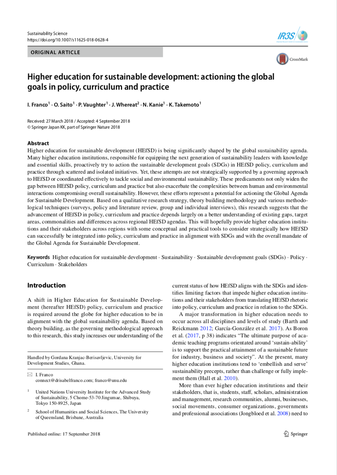
Click on image to access full document
Climate Finance Assessment, Pakistan
Asian Development Bank · PakistanClient: Asian Development Bank.
Scope: Climate finance assessments of companies to determine their eligibility for blended and concessional finance.
Parametric Climate Insurance for Women Micro Borrowers
Asian Development Bank · South AsiaClient: Asian Development Bank.
Scope: Design of parametric climate insurance for women micro borrowers in South Asia, built on climate finance and social inclusion.
Social risk assessment and confidential due diligence
Hatch · Asia and the Pacific and the AmericasClient: Hatch.
Master class: a master class that equipped Hatch personnel to run social risk assessments of extractive projects (mining, oil and gas), applying a sustainable livelihoods framework and IFC methodology, with related technical and research studies.
Confidential due diligence: due diligence reports for mergers and acquisitions of large gas and mining projects, with recommendations to help companies respect human rights, aligned with the OECD Due Diligence Guidance for mineral supply chains and oil and gas. The work was presented at the OECD Forum on Responsible Business.
Mine Life Cycle Planning- Creating Lasting Value for Communities
Participant Stakeholders: Continental Gold mining company, AngloGold Ashanti, Seafields Resources Canadian Exploration Company, Local and State governments of Antioquia and Risaralda, Ministry of Mines of Colombia, AngloAmerican Chile, The University of Queensland and civil society organisations, the Town of Leigh Creek, Alinta Energy and the University of New England.
Sustainability Leaders: Isabel B. Franco, Ph.D; S. Robertson (Australia)
Impact: Mine life cycle planning and enduring value are taking stage to meet corporate goals and deliver socio-economic outcomes for communities over the life of a mine. There is a general agreement in the literature about mining-induced effects on locals adjacent to mining operations and subsequent closure. In response, international regulatory bodies, through the implementation of global agendas, encourage exploration and mining companies to embrace the concept of corporate social responsibility. This concept is designed to provide sustainable outcomes and maintain a social license to operate over the life of a mine. This project proposed innovative tools for mine life cycle planning. Based on the findings, this project explored the socio-economic impacts of mining and mine closure. It also recommends that transferring some of the benefits from mining to create lasting value for communities needs to be considered at the initial stages of planning for the mine and the community. Recommendations also indicate that conditions such as strong local government, good governance arrangements, relevant capacity-building for sustainable livelihoods and a diversified economy are important to transferring some of the benefits from mining to create lasting value for communities. The case studies for this project were conducted in Australia and Colombia. Our Founder Dr. Isabel B. Franco in collaboration with colleagues from the University of New England, Australia led the project.
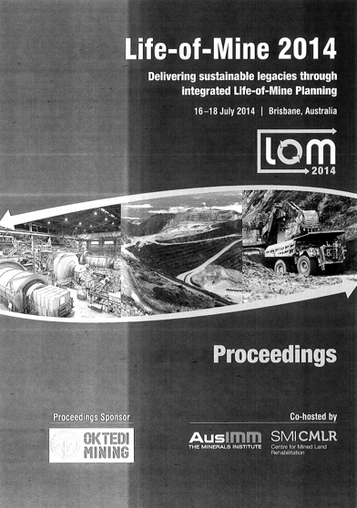
Click on the image to access full document
A Review of Sustainable Fashion Design Processes: Upcycling Waste Organic Yarns
Participant Stakeholders: United Nations University, Institute for the Advanced Study of Sustainability, Bunka Gakuen University, Fashion Global Concentration.
Sustainability Leaders: C. Arana (Colombia), Dr. Isabel B. Franco, A. Joshi (Nepal); and J. Sedhai (Nepal)
Impact: The fashion industry has had a significant impact on the environment and overall global sustainability. Evidence shows it is the most polluting industry and the largest consumer of water, accounting for 20 percent of global water wastage detrimentally affecting both life on land and underwater. As such a few key stakeholders in the fashion industry have begun undertaking key preventative measures. These include but are not limited to the use of organic cotton crops, reduction of water use throughout the production chain, the implementation of a zero waste pattern making technique, second-hand shops, recycling of production materials, recycling discarded fishing nets into nylon fibre, and increasing the use of biodegradable fibres, crop’s waste fibres, bio-based fibres, and bio-textile processes and renewable sources like bamboo and hemp. The review presented in this chapter examines the fashion production cycle, the use of alternative organic materials and recycling processes for the sustainable production of yarns, whilst exploring the connections between the Sustainable Development Goals (SDGs) 15 Life of Land and 14 Life below Water.
Click on the image to access full document
The Untapped Potential of Women for Sustainable Peace in Resource Regions
Participant Stakeholders: United Nations University, Institute for the Advanced Study of Sustainability (UNU-IAS); The University of Queensland, Business School
Sustainability Leaders: Dr. Isabel B. Franco; E. Derbyshire (Australia)
Impact: This chapter makes a strong contribution to SDG 16 as it examines the role of women and livelihood options in fostering sustainable peace. Research was conducted in rural communities in the vicinity of Risaralda, Colombia, a resource-rich region. The results obtained are important as they provide insights into the heterogeneous composition of communities, particularly women and their identities, which explains contrasting perceptions toward project development. Secondly, outcomes entail a practical dimension which suggests that in the process of assessment, development and management of resources, differences related to community identity, religion and context-based factors must be recognized and taken into account to foster sustainable peace and overall regional sustainability.
Click on the image to access full document
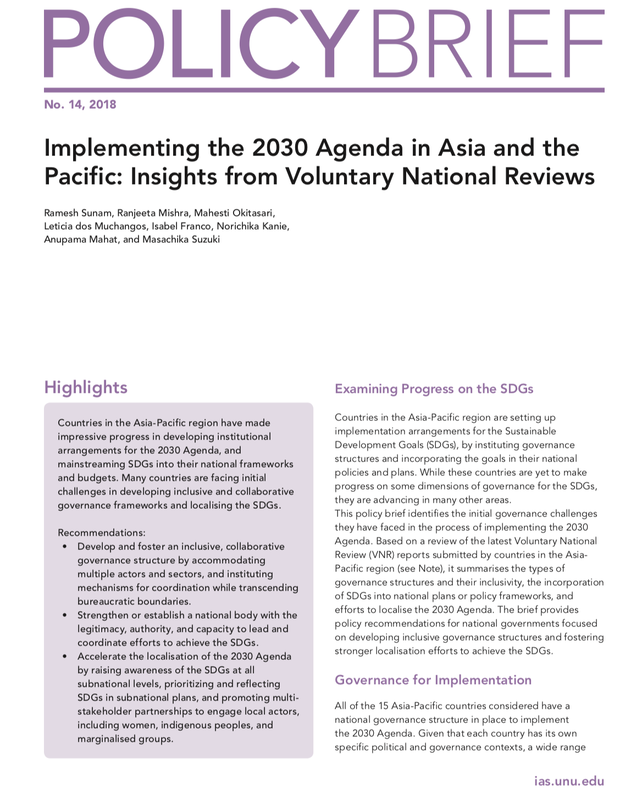
Implementing the 2030 Agenda in Asia and the Pacific: Insights from Voluntary National Reviews
Sustainability Leaders: Dr. Isabel B. Franco, L. Sarmento Dos Muchangos (Mozambique); M. Okitasari (Indonesia); R. Mishra (India); R. Sunam (Nepal); N. Kanie (Japan); M. Suzuki (Japan); A. Mahat (Nepal).
Participant Stakeholders: United Nations University-Institute for the Advanced Study of Sustainability, Keio University, Sophia University, Australia National University, United Nations High Level Political Forum
Impact: Countries in the Asia-Pacific region have made impressive progress in developing institutional arrangements for the 2030 Agenda, and mainstreaming SDGs into their national frameworks and budgets. Many countries are facing initial challenges in developing inclusive and collaborative governance frameworks and localising the SDGs. Some of the recommendations derived from this project are as follows:
· Develop and foster an inclusive, collaborative governance structure by accommodating multiple actors and sectors, and instituting mechanisms for coordination while transcending bureaucratic boundaries.
· Strengthen or establish a national body with the legitimacy, authority, and capacity to lead and coordinate efforts to achieve the SDGs.
· Accelerate the localisation of the 2030 Agenda by raising awareness of the SDGs at all subnational levels, prioritizing and reflecting SDGs in subnational plans, and promoting multi- stakeholder partnerships to engage local actors, including women, indigenous peoples, and marginalised groups.
Our Founder Dr. Isabel B. Franco participated in the development of the project with colleagues and other Exceptional Women in Sustainability.
Click on the image to access full document
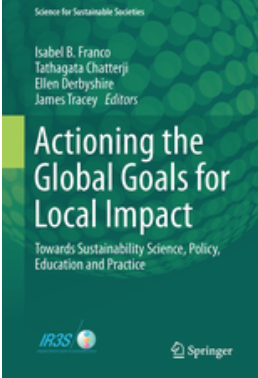
Global Business Networks: Accounting for Sustainability
Participant Stakeholders: United Nations University, Institute for the Advanced Study of Sustainability; UNESCAP
Sustainability Leaders: Isabel B. Franco; Dr. M. Abe (Japan)
Impact: Corporate accountability has expanded rapidly in recent years as a tool that business can employ to respond for corporate performance. Nevertheless, the exercise of corporate accountability is challenging as it requires stronger corporate capacity and commitment to respond to external stakeholders in alignment with voluntary regulatory norms. In response, corporate agendas are being significantly shaped by internal and external stakeholders, that is employees, suppliers and customers. Yet, an examination of the current status of accountability both as a historical trend and in current corporate agendas in selected cases shows an increasing gap between policy and impact. Based on a case study method and theory building, the research reported in this article shows the status of corporate accountability of companies operating in Asia-Pacific and adhered to the Global Compact Network. It also provides some conceptual and practical tools towards enhanced accountability, contributing to the achievement of the Sustainable Development Goal 17 (SDG 17) and its targetsMulti-stakeholder partnerships (17.16 and 17.17) and Data, monitoring and accountability.
Click on the image to access full document
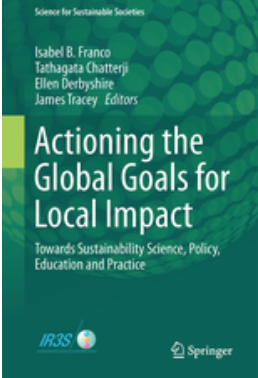
Governing Education for Sustainable Development: Towards Inclusive and Equitable Quality Education
Participant Stakeholders: United Nations University – Institute for the Advanced Study of Sustainability, The University of Queensland
Sustainability Leaders: Dr. Isabel B. Franco; E. Derbyshire (Australia)
Impact: This project provided a contribution to the achievement of the Sustainable Development Goal 4, Quality Education (SDG 4) through analysing stakeholder partnerships and collaboration for the implementation of Education for Sustainable Development (ESD). The outcomes of the research argue that a better understanding of limiting and fostering factors preventing greater collaboration for ESD is required in order to meet the targets set by SDG 4 which advocates for Inclusive and Equitable Quality Education. This research project provides a multi-level governance analysis (global, national and institutional) on ESD and key stakeholders’ perceptions on limiting and fostering factors in collaborative governance for ESD. It also increases our understanding of whether ESD policy developed at the international level can be imagined at the national, institutional and local levels and highlights the factors involved in collaboration for ESD. This hopefully helps us understand how to develop rhetoric that can advance from policy to impact. Conclusions drawn from these analyses highlight key inconsistencies and gaps that resulted from incompatible perspectives and motivations for realizing ESD at all levels of governance.
Click on image to access full document
Community Capacity-building for Sustainable Development: Effectively Striving towards Achieving Local Community Sustainability Targets
Sustainability Leaders: Isabel B. Franco, Ph.D; J. Tracey (Australia)
Participant Stakeholders: United Nations University- Institute for the Advanced Study of Sustainability UNU-IAS and University of Western Australia
Impact: There is a general concern in the scholarly literature pertaining to global sustainability research and education agendas and their real-life effectiveness for local communities. Yet there are many unanswered questions in this area. The research derived from this project increases our understanding of these questions and how they can be addressed. Based qualitative research, this chapter presents priority community capacity-building areas for education for sustainable development. It also shows that improving identified areas seems from this study to be the most effective way to enhance the ability of local communities to cope with pressing global sustainability challenges over time. This research project paid nuance attention to the nature and importance of community capacity-building for fostering SDG 4 quality education in the pursuit of sustainable development.

Click on image to access full document
Equal Rights Ensure a Strong Society
Sustainability Leaders: Isabel B. Franco, Ph.D; M. Mousumi (Bangladesh), Sarvajaya Choudhury (Bangladesh)
Participant Stakeholders: United Nations University- Institute for the Advanced Study of Sustainability UNU-IAS and BRAC Institute of Educational Development, BRAC University
Impact: Human rights include women’s rights, and for women to be empowered on equal grounds as men, is at the end of the day, human rights. However, we find ourselves today in a world led and dominated by men. This begins from the basic core household level and carries on up to global dominance. Women need to be given fair and equal representation in every field of life to ensure a balanced social environment. When society allows women to grow, it automatically enhances the structure of the society and its economic status. A disturbed and distressed society usually gets created out of suppressed women and dominant men. The key is equality of existence.
This article shows that it is rather difficult to obtain equal status for women in society when all the norms and rules are dictated by men. We find men and women on different payrolls for the same job performed by either, and this is no secret. Conditions are already laid down for women in society even before they can understand society. The pressure for a female on the ways of living life, beginning from home to every little step outside of it is massive. When society is afraid of loosening and letting go of the grip on its reins on women, it only reflects how weak it is.

Photo Credit: Sarvajaya Choudhury
Click on image to access full document
The Americas
Business cases 3
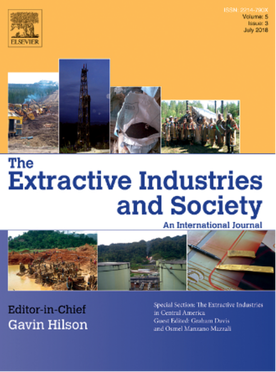
Decentralisation, Corporate Community Development and Resource Governance
The University of Queensland, with DFAT and the International Mining for Development Centre · Australia and Latin AmericaClient: The University of Queensland, with the Department of Foreign Affairs and Trade and the International Mining for Development Centre.
What we delivered: tools and methodologies to help stakeholders in Australia and Latin America deliver sustainable legacies, capacity building and training materials, and institutional partnerships in resource regions of Latin America.
Participant Stakeholders: Continental Gold mining company, AngloGold Ashanti, Seafields Resources Canadian Exploration Company, Local and State governments of Antioquia and Risaralda, Ministry of Mines of Colombia, AngloAmerican Chile, The University of Queensland and civil society organisations.
Sustainability Leaders: Dr. Isabel B. Franco; Prof. S.Ali (U.S.A)
Impact: The major challenge that companies face when engaging in sustainable livelihood transformations is related to the tiers of governance dynamics in which companies are immersed. The implementation of social responsibility agendas in poorly governed regions rarely delivers sustainable legacies for communities. This research posits the idea that the lack of regional connectivity in governance and conflict prevents companies from playing a stronger role in forging sustainable livelihoods. In this context, this research equips us with a broader understanding of the contribution of the private sector in delivering development outcomes. It does this through a comparative case study analysis of Risaralda and Antioquia, two resource regions in Colombia with differing governance nexus with private enterprises.
Click on the image to access project’s outcome
FIFCO Trasciende: ESG strategy and sustainable branding
FIFCO USA · Costa RicaClient: FIFCO USA.
Challenge: FIFCO USA wanted to reactivate and refine its business strategy so it could align with its corporate purpose, strengthen the relevance of its sustainable brand and grow by responding to customer demands.
What we delivered: ESG strategy, sustainable branding and corporate purpose advisory, delivered through an interactive masterclass where shareholders and stakeholders met in person and online to discuss ESG, brainstorm ideas and develop strategic solutions, including the business case for brand purpose and ESG.
UQ ALABC Latin American Sustainability Symposium
ALABC and The University of Queensland, with COALAR · Australia and Latin AmericaClient: Australia Latin America Business Council and The University of Queensland, with COALAR.
What we delivered: a digital symposium on sustainability best practice between Australia and Latin America, with presenters from Orica, the Embassy of Peru, BHP Foundation, South Pole, MMG, Geovia Dassault Systèmes, CSIRO and Santos.
Impact: more than 500 participants across regions.
International projects 14
Building Sustainable Communities: A Framework for Supporting Community Livelihoods and Poverty Alleviation in Resource Regions
Participant Stakeholders: International Mining for Development Centre (now MEfDA), Continental Gold mining company, AngloGold Ashanti, Seafields Resources Canadian Exploration Company, Local and State governments of Antioquia and Risaralda, Ministry of Mines of Colombia, The University of Queensland.
Sustainability Leaders: Dr. Isabel B. Franco; Prof. J. Minnery (Australia)
Impact: This project proposed the use of the Sustainable Livelihood Framework (SLF) as a powerful conceptual approach for research aimed at understanding the interaction between global investment, local livelihoods and poverty reduction in resource regions. The project applied the SLF as a tool to develop recommendations for poverty alleviation, showing how it can contribute to SDG 1 No Poverty. The innovative application of the SLF helps us understand the ways in which key areas of research connect and interact as constituent components of the inherent in the framework. This project also showed that this framework helps increase our understanding of the ways communities build capacity to forge sustainable livelihoods in resource regions. It thus presents a justification for the use of the SLF, followed by an examination of the SLF principles, their implications for communities and relevance for empirical research in this field. The project also shows the way in which the SLF can be modified for application to local circumstances through case studies conducted in two resource regions of Colombia. Nevertheless, the findings of the research can be applied to other resource locations elsewhere.
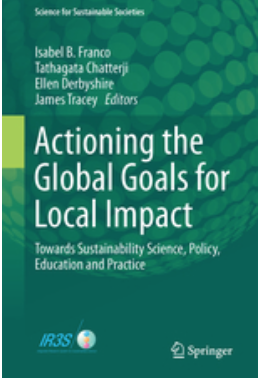
Extractives and Sustainable Community Development: A Comparative Study of Women’s Livelihood Assets in the Americas
Participant Stakeholders: Continental Gold mining company, AngloGold Ashanti, Seafields Resources Canadian Exploration Company, Local and State governments of Antioquia and Risaralda, Ministry of Mines of Colombia, AngloAmerican Chile, The University of Queensland, University of Northern British Columbia and civil society organisations at Nemiah Valley of British Columbia in Canada.
Sustainability Leaders Dr. Isabel B. Franco UNU-IAS; Titi Kunkel, University of Northern British Columbia, Canada
Impact: The world has experienced a rapid growth in the mining industry due to increased demand for minerals. However, this situation has given rise to complexities in resource regions, compromising how women sustain their livelihoods. With increasing deregulation and globalization of the world economy, the livelihoods of women in resource-rich regions deserve special attention. Women in communities adjacent to extractive operations commonly experience a loss of livelihood options. Using case studies, this paper compares the livelihoods of women in two resource regions, Risaralda in Colombia and an Indigenous community in Nemiah Valley of British Columbia in Canada. This paper argues that the extractive industry should engage with women to enhance their assets and help them forge more sustainable livelihood options. The paper also makes recommendations to stakeholders on how livelihood assets can be enhanced to benefit women in resource development regions.
Community Capacity Building and a License to Operate in The Mining Industry
Participant Stakeholders: Continental Gold mining company, AngloGold Ashanti, Seafields Resources Canadian Exploration Company, Local and State governments of Antioquia and Risaralda, Ministry of Mines of Colombia, AngloAmerican Chile, The University of Queensland and civil society organisations.
Sustainability Leaders: Isabel B. Franco, Ph.D
Impact: This project aimed to increase our understanding about existing community capacity-building approaches and their implications for obtaining a social license to operate in the mining industry. The notion of ‘capacity building’ is gaining increasing currency in the mining sector in developing countries, due to the rapidly increasing globalised nature of mining operations. Building a community’s capacity to understand and effectively respond to these transformations is vital for obtaining a social license to operate, as it promotes sustainable and locally relevant development. Accountability mechanisms, such as global norms and international standards, increasingly point to the need to build capacity among stakeholders, particularly among local communities adjacent to mining operations. International frameworks and mining companies have embraced the notion of community capacity-building as a driver to assist corporate social and operational performance. However, this narrow understanding of capacity-building through the prism of corporate social responsibility and ‘best practices’ is preventing the industry from impacting communities meaningfully, and from forging sustainable communities in the regions where it operates. The idea of a social license to operate is being widely embedded across multiple industry sectors, as a social and economic reward from mining companies to compensate communities for natural resource extraction and gain social acceptance.
Click on the image to access full document
Climate Education: Identifying Challenges to Climate Action
Participant Stakeholders: United Nations University, Institute for the Advanced Study of Sustainability, Research eWisely Lab,
University of New South Wales
Sustainability Leaders: Dr. sabel B. Franco; R. Tapia (Chile); J. Tracey (Australia)
Impact: There is an increasing consensus that stakeholders at education institutions, specifically, educators and students face enormous challenges in translating climate education into effective action. Therefore, a better understanding of these issues, both within and beyond education institutions, is paramount. This chapter addresses such issues within education institutions, including; teachers and students misconceptions regarding climate change, behavioural issues and social considerations such as peer pressure. This investigation worked to critically analyse issues with the current Climate Education scheme, whilst identifying key areas in which improvements should be made to effectively promote Climate Action and contribute to the achievement of the sustainable development goal related to Climate Action (SDG 13)
Click on the image to access full document
Planning for Mining Regions: Building Local Government’s Capacity in a Multi-Stakeholder Collaboration Scenario
Participant Stakeholders: Continental Gold mining company, AngloGold Ashanti, Seafields Resources Canadian Exploration Company, Local and State governments of Antioquia and Risaralda, Ministry of Mines of Colombia, AngloAmerican Chile, The University of Queensland and civil society organisations
Sustainability Leader: Dr. Isabel B. Franco; T. Chatterji (India)
Impact: A severe global demand for natural resources lead multi national and local mining companies to drive escalating mining operations in Colombia. However, discontent among the local communities is growing; they are still stuck in poverty and left out of this economic boom. There is a need for greater developmental work and a sustainable livelihood approach, which needs the immediate attention of the Colombian government, local civil activists and mining companies. Dr. Isabel Franco’s research investigates specific institutional deficiencies in political and technological terms. It shows local agencies and multistakeholders are unable to respond to the demands of infrastructure development, employment generation, land-use regulation and the social and environmental impacts of mining. The research discusses the challenges of existing government capacity- building gaps and their implications on the two mining dependent regions of Antioquia and Risaralda in Colombia. Dr. Isabel Franco compares the two regions and outlines the successes of amending planning processes in Risaralda leading to the creation of sustainable livelihoods. The research is based on qualitative research including field observations, interviews of local government officials, mining company executives and community activists.
Click on the image to access full document
Peace with Hunger: Colombia’s Checkered Experience with Post-Conflict Sustainable Community Development in Emerald-Mining Regions
Participant Stakeholders: COALAR, Australia Limited, Mining Texas Colombia, Colombian Government (Ministry of Mines), Local Governments, The University of Queensland, Universidad de los Andes
Sustainability Leaders: Dr. Isabel B. Franco; Prof. J. Puppin (Brazil); Prof. S. Ali (U.S.A)
Impact: The interactions between conflict and local development has puzzled scholars and practitioners alike. This project explored why the advent of peace in Colombia’s emerald-mining regions for the past few years, as well as a broader national peace process, has not delivered the expected development dividends among mining communities. We contrasted differences in stakeholders’ perceptions between levels of governance (local, regional and national). Based on the research, we conclude that while stakeholder collaboration is successful at the regional and national levels of governance, it fails at the local level. While peace has allowed an increase in mainstream business investment in mining, this has concentrated production in a few hands leading to a deterioration in many aspects of community livelihoods and wealth distribution. There has been a shift in the concentration of wealth and production from traditional elites to large companies. Communities noted a loss of collective assets and lack of community and institutional capacity to overcome pressing issues in a post-conflict market economy that favors those who control capital and technology. Based on an evaluation of community perceptions through a focus group methodology, this study recommends ways to prepare and better coordinate stakeholders to engage with complex relationships, and protect community assets in a collaborative governance scenario. This research suggests that political reconciliation processes amid complex resource geographies require greater devolution and community engagement on post-conflict economic development during the peace process itself.
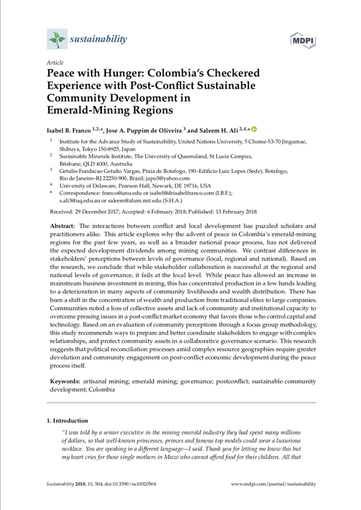
Click on image to download full text
Sustainable Community Development through Entrepreneurship: Corporate-Based versus Wellbeing-Centered Approaches to Responsible Production
Participant Stakeholders: Business School, The University of Queensland, Continental Gold Mining Company, AngloGold Ashanti, Seafields Resources Canadian Exploration Company, Local and State governments of Antioquia and Risaralda, Ministry of Mines of Colombia
Project Lead: Dr. Isabel B. Franco; Dr. L. Newey (Australia)
Impact: This project aims to build new theory about the links between sustainable community development, entrepreneurship, community wellbeing and interlinkages between the Sustainable Development Goal 12 (hereafter SDG 12) – Sustainable Consumption and Production and the Sustainable Development Goal 3 (hereafter SDG 3) – Good Health and Wellbeing. New theory is needed because multidimensional wellbeing has not been used as an outcome variable with which to assess relative merits or understand the intricacies of how development approaches achieve synergies or fragmentation between the varying components of wellbeing. The research presented here is based on a case study qualitative methodology strategy. Evidence shows that resource-rich regions of Latin America are sites for sustainable community development and responsible production by international companies. Through a comparative case study of two resource towns in Colombia, Antioquia and Risaralda – we find contrasting approaches with different outcomes. A top-down corporate-based approach to sustainable community development occurred in Antioquia but bound the future of the community to resource extraction (mining) with limited attention to other aspects of community wellbeing. This reduced the overall resilience and wellbeing opportunities for the community. In Risaralda, by contrast, a more responsible, wellbeing-conscious approach was adopted based on local entrepreneurship. Entrepreneurship here was not only focused on economic development and the future self-sufficiency of the community apart from mining but was also conscious of producing responsibly and building a greater range of wellbeing components other than just economic. We use these results to articulate a wellbeing-centric approach to development called Entrepreneurship for Community Wellbeing.
Click on the image to access project’s outcome
Mujeres de Hierro en América Latina y el Caribe
Integración del Objetivo de Desarrollo Sostenible 5 (ODS 5 Igualdad de Género) en la Industria Extractiva (Minería, Petróleo y Gas)Sustainability Leaders: Dr. Isabel B. Franco
Participant Stakeholders: Dr.Isabel B. Franco, Founder eWisely and Women undergraduate researchers from various eWisely connectors in Latin America and the Caribbean.
Impact: (study available in Spanish only) El estudio reportado en este informe presenta la integración del ODS 5 en la industria extractiva en países en América Latina y el Caribe. El estudio se soporta en hallazgos de investigación científica y una compilación de casos de mujeres en extractivas en países en América Latina y el Caribe. La investigación hace énfasis en la integración del ODS 5 (Igualdad de Género) con el objetivo de promover prácticas e iniciativas internacionales para la inserción sostenible de la mujer en la industria extractiva y su cadena de valor en América Latina. Este estudio presenta un enfoque para la integración del ODS 5 soportado en investigación científica liderada por nuestra Fundadora la Dra. Isabel B. Franco y el equipo de investigación eWisely en el marco del proyecto WIMLATAM .
Este estudio nace de la necesidad de fomentar la participación sostenible de mujeres en la industria extractiva y la cadena de valor. Los retos que enfrentan las mujeres a nivel global generan limitaciones que comprometen la productividad del sector. Entre las limitaciones existentes predominan: La disparidad de salarios y bajas oportunidades de desarrollo profesional, la dificultad para conciliar la vida familiar y personal debido a los sistemas de trabajo en turno y falta de arreglos laborales flexibles, así como una cultura masculina dominante que se refleja en las rutinas de trabajo, y que resulta en la discriminación y acoso dentro de las organizaciones.
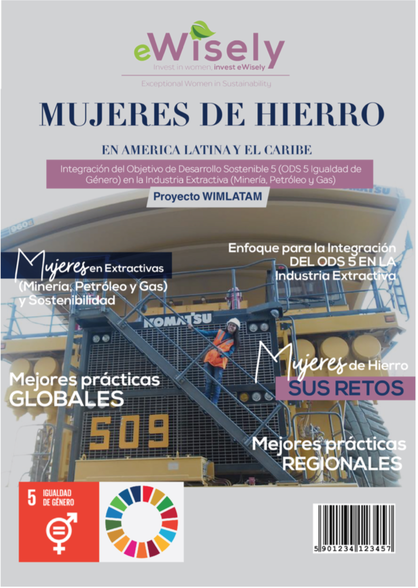
Click on image and visit our Facebook Mentoring Group to access full document (under files)
MUJERES DEL DORADO
Integración del Objetivo de Desarrollo 5 (Igualdad de Genéro) en la Industria Extractiva · El Caso ColombianoSustainability Leaders: Dr.Isabel B. Franco; N. Cano (Colombia), MA, K. De la Hoz (Colombia)
Participant Stakeholders: Anglogold Ashanti Colombia, Red Eagle Colombia, Cerromatoso South32, Cerrejón, Continental Gold, Mineros S.A y Drummond LTD Colombia.
Impact: El reto principal que enfrentan las empresas en el desarrollo de su estrategia de sostenibilidad, es la integracion efectiva del los Objetivos de Desarrollo Sostenible (ODS), particularmente el ODS 5 Igualdad de Género y su impacto en las regiones donde operan, las comunidades y grupos vulnerables, especialmente las mujeres. Las estrategias de sostenibilidad existentes y agendas de responsabilidad social de las empresas en las regiones donde se realiza el aprovechamiento de los recursos naturales rara vez incorpora la integracion de los ODS o en su defecto no existe una implementacion adecuada de los mismos en contextos como el colombiano.
Soportado en hallazgos cientificos, grupos focales con mujeres en la industria extractiva colombiana y un Marco Metodologico la Integracion del ODS 5, este reporte presenta la evaluacion del ranking realizado a empresas de la industria extractiva colombiana, en integracion del ODS 5, igualdad de género. El reporte presenta recomendaciones para la industria en la promocion del ODS 5 y por oo tanto de la sostenibilidad de las regiones donde opera. Las empresas rankeadas en este reporte son a saber: Anglogold Ashanti Colombia, Red Eagle Colombia, Cerromatoso South32, Cerrejón, Continental Gold, Mineros S.A y Drummond LTD Colombia.
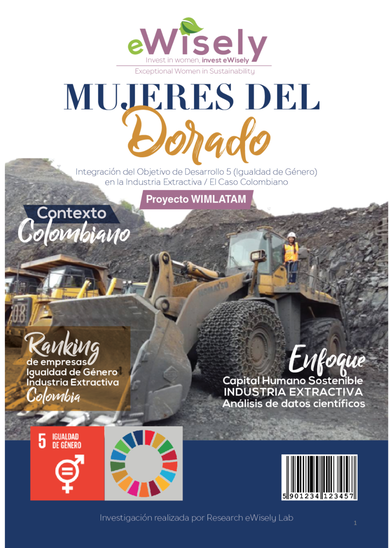
Click on image and visit our Facebook Mentoring Group to access full document (under files)
Sustainable Human Capital Development of Women in the Extractive Industry, The Colombian Case
Sustainability Leaders: MA K. De la Hoz (Colombia); Dr. N. Cano (Colombia), Dr. Isabel B. Franco
Participant Stakeholders: Research eWisely Lab
Impact: The main challenge faced by companies in the development of their sustainability reports is the incorporation of a sustainable approach that promotes both corporate and social sustainability. Scientific research in the Colombian case showed that the extractive industry must invest in six forms of women’s human capital, particularly those in resource regions, namely: education, innovation, employment, entrepreneurship, leadership and sustainability. These components are part of the so-called ‘Framework for Sustainable Human Capital Development’ TM. The existing sustainability reports and social responsibility agendas of companies in resource regions rarely incorporate these components simultaneously or, fail in implementing those in countries such as Colombia. This report does a practical application of these six components in light of the sustainability reports of extractive companies operating in Colombia. The report presents preliminary findings of scientific research aimed at exploring the application of the ‘Sustainable Human Capital Development Framework’ TM in the Colombian context.
Click on image to access full document
Integración Sustentable de las Mujeres en la Industria Minera: El Caso Chileno desde una Perspectiva de Género Global/Local
Sustainability Leaders: Dr. Isabel B. Franco; P. Salinas (Chile)
Participant Stakeholders:Universidad Católica del Norte, Chile United Nations University- Institute for the Advanced Study of Sustainability UNU-IAS
Impact: (available in Spanish only) En colaboración con colegas de la Universidad Católica del Norte en Antofagasta, Chile, nuestra Fundadora la Dra. Isabel B. Franco, publicó la investigación Integración Sustentable de las Mujeres en la Industria Minera: El Caso Chileno desde una Perspectiva de Género Global/Local. La investigación, conecta el ODS 5 (Igualdad de Género) y el ODS 8 (Trabajo Decente y Crecimiento Económico). Basado en una metodología de estudio de caso y análisis del discurso, el estudio involucró la participación de líderes en la industria, mujeres en minería en Chile, organizaciones de la sociedad civil y hacedores de política. Los hallazgos mostraron que las instituciones de educación superior son responsables de equipar a las mujeres con habilidades como adaptabilidad, estrategia, liderazgo, trabajo en equipo, etc. Sin embargo, el mayor reto para la industria es la ausencia de políticas corporativas y de gobierno que permitan una mayor participación de las mujeres en ambientes predominantemente masculinos. Los hallazgos pueden ser aplicados en otros contextos mineros en América Latina o en otras latitudes. El estudio fue publicado en español por la Universidad Católica del Norte en Antofagasta, Chile, en el libro titulado ‘Desarrollos y Subdesarrollos en los Territorios de Chile’.
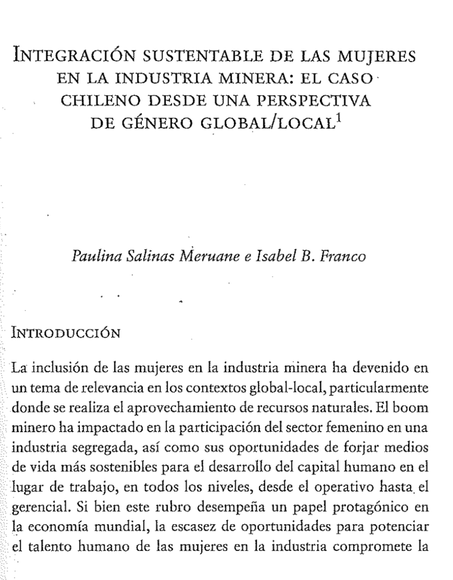
Click on image to access full document
Sustainable Use of Energy and Water Resources in the Mining sector: A Comparative Case Study of Open-pit and Alluvial Mining Technology
Participant Stakeholders: United Nations University – Institute for the Advanced Study of Sustainability; Universidad Nacional de Colombia; Mineros S.A
Sustainability Leaders: Dr. Isabel B. Franco; N. Cano (Colombia)
Impact: Environmental impacts associated with the use of water and energy resources are among the most significant problems for the mining industry, requiring the implementation of new solutions in line with Sustainable Development Goal 6 – Clean Water and Sanitation. Currently, the challenge is converting mineral wealth into development opportunities, whilst responding to the needs of future generations. This is specifically regarding the investment of non-renewable resources in the implementation of strategies to promote the efficient use of both renewable and non-renewable energy sources. This chapter aims to evaluate the cradle-to-gate consumption of renewable (water) and non-renewable energy sources in both open pit and alluvial mining systems. Additionally, Life Cycle Analysis has been performed to both estimate and analyze their impact on water resources. This is extended by the presentation of opposing reductive strategies including the optimization of process efficiency and use of circular economies. This research is significant within the Colombian context as water usage is often a determining factor in the attainment of key environmental and social licenses. Furthermore, the results of this investigation clearly show how water usage, and the magnitude of its related impacts differ between opposing forms of extraction.
Click on the image to access full text
Beyond CSR? The Global Business of Local Sustainability
Participant Stakeholders: Continental Gold mining company, AngloGold Ashanti, Seafields Resources Canadian Exploration Company, Local and State governments of Antioquia and Risaralda, Ministry of Mines of Colombia, AngloAmerican Chile, The University of Queensland and civil society organisations.
Sustainability Leaders: Dr. Isabel B. Franco
Impact: In recent years there has been increasing emphasis on the need for greater involvement of global business in fostering local sustainability. Various old forms of business ethics and corporate social responsibility are being replaced by sustainable business practices. Here, the private sector plays a key role. Yet, the role of the market, in mitigating the conflicting demands of the global economy and local livelihoods, is under- investigated. Dr. Isabel Franco’s book: ‘Beyond CSR? The global business of local sustainability’, explores the linkage between global mining and local livelihoods, which currently causes productive losses in the industry on account of delays and extra wages for imported labor as well as it fosters discontent and tensions in the region affected. The book is based on research findings, field observations and interviews with local corporate and government officials and community-based organisations. It focuses on the sustainable livelihood approach and develops a framework how mining and exploration interventions can help support communities adjacent to mining operations to maintain their livelihoods and meet their own development aspirations. The Project was led by our Founder Dr. Isabel B. Franco from idea to execution. To find out more about the livelihood strategies read “Dr. Isabel B. Franco’s book: ‘Beyond CSR? The global business of local sustainability.”
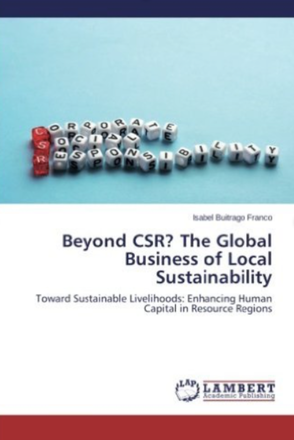
Click on the image to access project’s outcome
Community Capacity-building for Sustainable Resource Governance in the Small-Scale Mining Industry
Participant Stakeholders: United Nations University, Institute for the Advance Study of Sustainability, Universidad Tomas Frias and Centro para la Promoción de la Minería CEPROMIN
Sustainability Leaders: Dr. Isabel B. Franco Founder; F. Gonzalez (Bolivia); J.A. Buitrago (Colombia)
Impact: There is a general concern in the scholarly literature pertaining sustainable resource governance and the implications for industries such as mining. Yet there are many unanswered questions in this area and the research reported in this chapter increases our understanding in this regard. Our investigation has shown there are essential capacity-building areas to trace a roadmap for sustainable resource governance in Small Scale Mining (herein SSM). Improving identified areas seems from this research to be the most effective way to enhance the ability of small-scale miners and stakeholders to cope with pressing sustainability issues over time. This chapter presents a capacity-building roadmap for SSM and pays attention to the nature and importance of these areas to achieve the Sustainable Development Goal 9 (herein SDG), Industry, Innovation and Infrastructure. What makes this research essential is its focus on the extent to which these areas are valuable for stakeholders involved in the SSM industry. It does this through a case study in Bolivia. This research is based on a qualitative strategy for data collection and case study methodology.
Click on the image to access project’s outcome
Africa
Business cases 2
Implementation of the Istanbul Programme of Action for the Least Developed Countries
Government of Angola, with UNDP · AngolaClient: Government of Angola, with UNDP.
What we delivered: a progress report and interim evaluation of Angola’s implementation of the Istanbul Programme of Action for 2011 to 2015, covering human development sectors and identifying best practices, lessons learned, obstacles, required actions and new challenges.
Participant Stakeholders: Government of Angola and United Nations Development Programme (UNDP)
Project Lead: Isabel B. Franco, Ph.D; UNDP; Ministry of Planning (Angola)
Impact: Angola has developed the Long-Term Development Strategy “Angola 2025” under the National Development Plan (NDP) for the period 2013-2017. Such strategy aims to guide the pace and quality of development to enhance the quality of life of the population, turning the potential wealth endowed in Angola´s natural resources into real and tangible wealth for Angolans. The main components of the IPoA are integrated into the long-term strategy and therefore, its implementation is done by achieving the Medium Term National Objectives presented in the NDP 2013-2017. In this context, this report presents an interim evaluation of the implementation of the IPoA components in 2011-2015.
Click on the image to access project’s outcome
UN 2030 Roadmap to Sustainable Resource Development
Government of Angola, with UNDP and ENDIAMA, CATOCA · AngolaClient: Government of Angola, with UNDP and ENDIAMA, CATOCA.
What we delivered: a review of how Angola’s extractives legislation and policy aligned with the Africa Mining Vision, covering the legal, institutional, policy and regulatory framework, with recommendations for improvement, and a workshop in English and Portuguese for 15 senior executives from the Ministry of Mines and Geology, UNDP Angola and CATOCA, ENDIAMA.
Impact: the project contributed to aligning Angolan policy with the Africa Mining Vision and defined a roadmap for sustainable resource development.
Sustainability Leaders: Dr. Isabel B. Franco; UNDP Angola
Participant Stakeholders: CATOCA Diamond Mining Company, ENDIAMA, UNDP executive team, Minister of Geology and Mines of Angola, Ministry of Finance, Ministry of Planning, Ministry of Industry, Ministry of Agriculture and Rural Development and Ministry Education, United Nations General Assembly.
Impact: The Angolan extractive industry has undergone a transformation leading the way to sustainable development. Yet, there are further alignments to be undertaken necessitating cooperation of all involved stakeholders. Currently, the extractive industry of Angola is aligned with its regional policy, however there are further adjustments to be made to meet requirements of the African Mining Vision (AMV). Under the guidance of the United Nations Development Programme (UNDP) Dr. Isabel Franco’s study “A Review of Alignment between national Extractives Legislation and Policy and the Africa Mining Vision (AMV)” outlines recommendations to conduct Angola’s alignment to meet the AMV’s goals. The study is conducted under the guidance of the United Nations Development Programme (UNDP). Angola has capacity- building gaps especially at the government level. This requires a transition from artisanal mining towards small-scale mining. Also, more efficient geological information systems need to be put in place along with further capacity expansion in research and development in this area. The study illustrates the need for economic diversification, social and environmental sustainability and human capital capacity- building. Recommendations to attain these goals are ways to improve the existing taxation, investment and governance schemes, yet all essential stakeholders and institutions need to work together to succeed on the path to the Africa Mining Vision. Our Founder Dr. Isabel B. Franco led the project in collaboration with the UNDP at the UN headquarters in Angola, Africa. For further information will be published in the UN report on AMV.
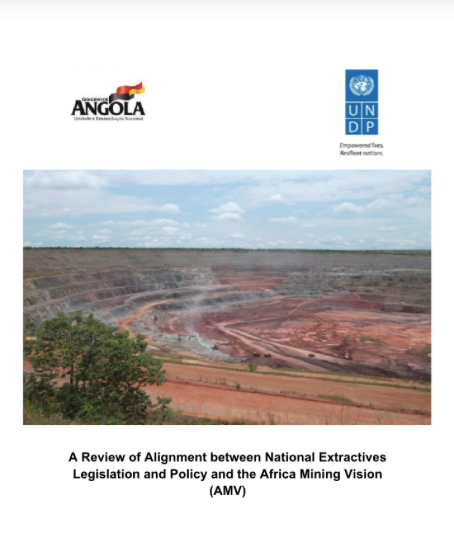
Click on the image to access full document
International projects 1
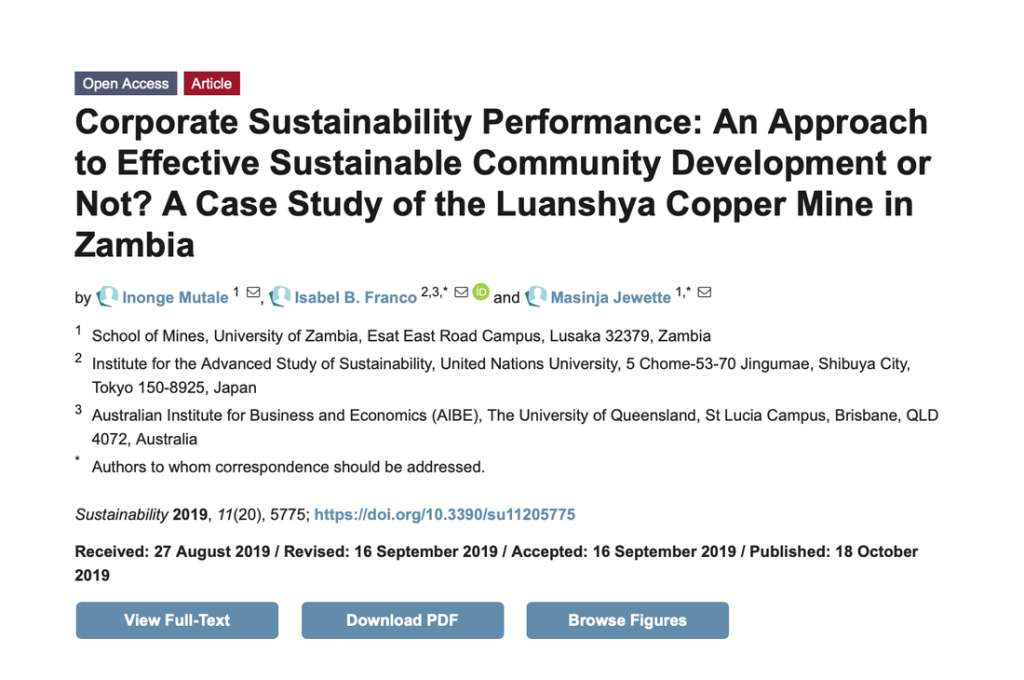
Corporate Sustainability Performance: An Approach to Effective Sustainable Community Development or Not? A Case Study of the Luanshya Copper Mine
in ZambiaCorporate Sustainability Performance (CSP) is being promoted as a way in which corporations in the extractive industry can contribute to poverty eradication in developing resource regions. As such, the international debate on CSP has moved from whether companies ought to do it or not, to the extent to which it can contribute to sustainable development. Corporations worldwide have therefore reshaped their frameworks, rules, and business models to accommodate CSP. This article evaluates whether, through the implementation of CSP, companies are able to contribute to the sustainable development of host communities in developing countries. Against this backdrop, there exists a knowledge gap in Zambia as to what the actual contributions of CSP are towards sustainable community development. Through literature review and community data analysis, the results revealed that there was a mismatch in priorities between CSP and the expectations of community members. Findings show that CSP focused mostly on haphazard donations, an approach that has been proven to be unsustainable. Finally, CSP had little or negligible impact on most selected Sustainable Development Goals (SDGs). In view of these findings, the study suggests adopting sustainability frameworks that are tailored to the local context. Furthermore, formulation of CSP initiatives should take a triangular approach of communication that is inclusive of all stakeholders.
Global and multi region
International projects 3
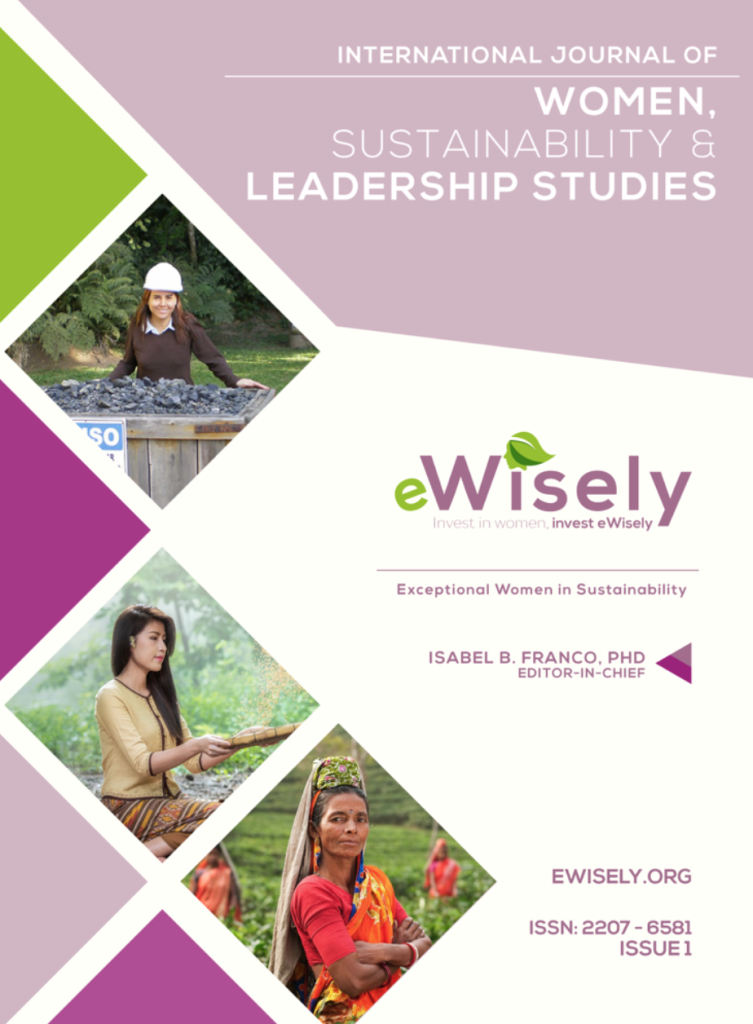
Toward a Women-Centric Approach to Sustainability in Resource Regions
Participant Stakeholders: Research eWisely Lab
Sustainability Leaders: Isabel B. Franco, Ph.D
Impact:The world has experienced rapid resource development threatening community livelihoods and human capital assets, particularly those of women. This research explores the linkage between disruptive industries like extractives and lack of sustainable livelihood options for women, which at the present scenario is not only causing productivity losses in extractive enterprises, but is also jeopardizing regional sustainability in resource locations. Research findings presented in this article show that stakeholders are increasingly being tasked with social responsibilities to forge sustainable livelihoods and enhance the human capital of communities, particularly of women. However, they do not know how to respond to emerging sustainability challenges. The paper proposes a strategic women-centric approach to sustainability to help stakeholders integrate women’s livelihoods and human capital assets into the extractive industry or other economic sectors relevant for the local economy. This approach has the potential to foster overall sustainability, particularly in the context of developing resource regions. This piece is based on a qualitative research technique for data analysis and case study research methodology.
Click on the image to access full document
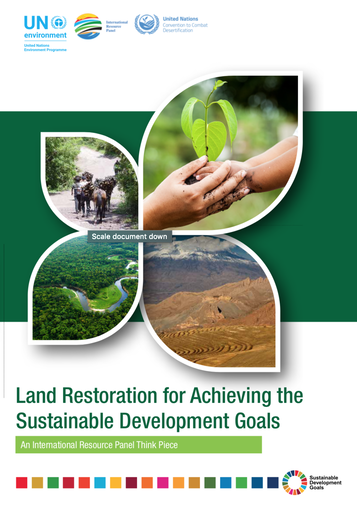
United Nations International Resource Panel Report: Land restoration for Achieving the SDGs
Participant Stakeholders: United Nations International Resource Panel
Sustainability Leaders: Isabel B. Franco, Ph.D; Prof. S. Ali (U.S.A)
Impact: Land Restoration for achieving SDG 16: Promoting Sustainable Peace, Accountable, Inclusive Institutions and Justice for All (pp. 111-115).
Land provides the most fundamental resource for nourishment and sustenance for a vast majority of the world’s population. When land is degraded and food supply is threatened human populations often descend to the most basic of instincts to survive and compete over scarce resources. Such a resource rush can lead to the further land degradation and a proverbial “tragedy of the commons”. restoring land has the potential for reversing such trends and there has been growing consensus to harness such peace dividends. Disputes over land need to be adjudicated fairly so that a respect for the judicial process can also prevent conflict escalation. Land restoration also provides an opportunity to “enlarge the pie” for dispute resolution pathways and possible solutions out of intractable conflict for professionals in the justice system.
Click on the image to access full document
#Yotambién Lidero: Hacia Éxito el Sostenible
Sustainability Leader: Dr. Isabel B. Franco
Participant Stakeholders: Research eWisely Lab
Impact: (study available in Spanish only) #Yotambién Lidero: Hacia Éxito el Sosteniblees el ejemplar más reciente de la serie Sostenibilidad Personal. Una serie dedicada a generar herramientas concernientes al Objetivo de Desarrollo Sostenible 3 (Salud y Bienestar). Este ejemplar nos invita a experimentar un nuevo estilo de vida, haciendo parte de un movimiento global de mujeres con la voluntad de liderar y contribuir a un mundo más sostenible. Este ejemplar fue escrito por Isabel B. Franco, Ph.D Fundadora de eWisely (Exceptional Women in Sustainability), la red de mujeres de mayor alcance en el mundo y cuyo propósito es conectar y posicionar a las mujeres en el centro de las agendas de sostenibilidad en los ámbitos, global y local.
Combinando hallazgos de investigación científica y su experiencia personal; la Dra. Franco presenta este ejemplar, el cual ha logrado conectar tres pilares fundamentales en el nuevo orden global: mujeres, sostenibilidad y liderazgo. Su misión es brindar a las mujeres herramientas de impacto que les permitan liderar, alcanzar el exito de manera sostenible y alcanzar la sostenibilidad personal. Narrando su historia de vida temprana y su anhelo de explorar nuevos horizontes, la Dra. Franco proporciona herramientas para mujeres en los primeros años de carrera. Para aquellas que buscan un nuevo horizonte o reinventarse, este libro les proporcionará herramientas para liberarse de sus miedos, trascender barreras y alcanzar la definición de éxito que mejor las identifique.

Click on image to access full document