Individually or in collaboration with leaders across the globe, I engage in multi-stakeholder engagement initiatives and cross-regional collaborations to deliver large projects on climate diplomacy, sustainability science, policy and practice.
Having lived across four continents, I have developed, refined and applied sustainability methods, tools and techniques in geographical contexts as diverse as Australia, Japan, China, Thailand, Bangladesh, Colombia, Chile, Peru, Zambia and Angola, among others.
Click a country on the map, or choose a region, to see the engagements delivered there. Select any cover to read more.
Asia Pacific
Editorial Board member (former)
Sustainability Science · 2020 to 2022 · Scientific Reviewer, current
Impact: I served as a member of the Editorial Board of the journal Sustainability Science. ‘Sustainability Science probes interactions between global, social, and human systems, the complex mechanisms that lead to degradation of these systems, and concomitant risks to human well-being. The journal provides a platform for building sustainability science as an evolving academic discipline which can point the way to a sustainable global society by facing challenges that existing disciplines have not addressed. These include endeavors to simultaneously understand phenomena and solve problems, uncertainty and application of the precautionary principle, the co-evolution of knowledge and recognition of problems, and trade-offs between global and local problem solving’.
Participant Stakeholders
- Sustainability Science Journal, Springer
- The University of Queensland, Australian Institute for Business and Economics (AIBE)
You can find more about the Editorial Board and the journal in the link below:
Editorial Board – Sustainability Science
Guest Panellist
UN ESCAP Asia – Pacific Conference on Financing Inclusive and Sustainable Development · Bangladesh, Asia -PacificImpact: I was invited by the United Nations Economic and Social Commission for Asia Pacific (UNESCAP) to participate in the Asia Pacific Conference on Financing Inclusive and Sustainable Development. I featured as a panellist at the regional workshop ‘scaling-up climate finance: urgencies to increase public and private sources for climate and and disaster resilient development in the Asia – Pacific Region.
Participant Stakeholders
- United Nations Economic and Social Commission for Asia Pacific (UNESCAP)
- The University of Queensland, Australian Institute for Business and Economics (AIBE)
You can find more about the Editorial Board and the journal in the link below:
Editorial Board – Sustainability Science
Guest Lecturer
University of Colombo · Sri Lanka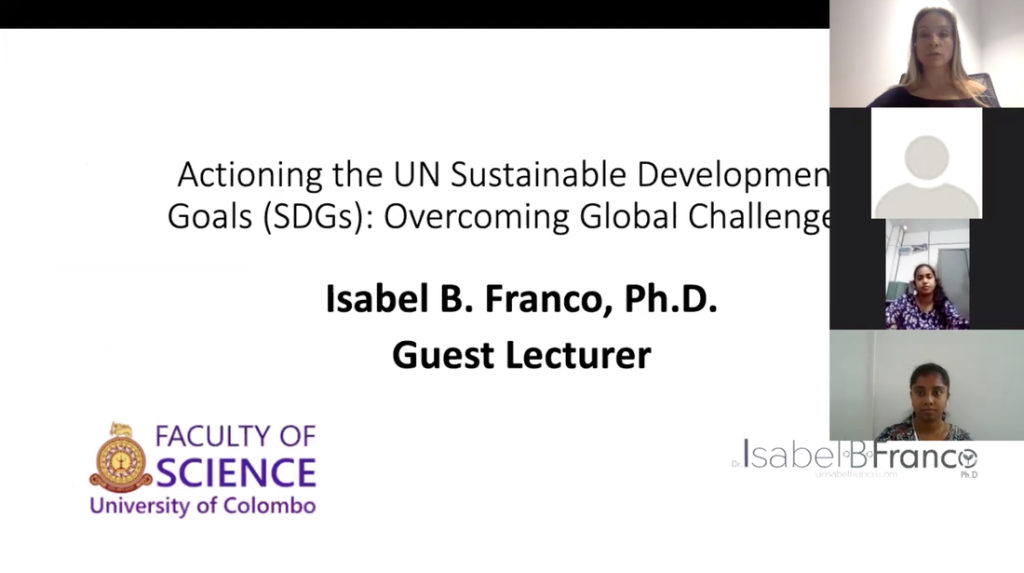
Impact: I was invited to give a lecture to students enrolled in environmental management-related programs at the Faculty of Science, University of Colombo in Sri Lanka. I discussed emerging approaches to sustainability science and practice and applications to overcoming global sustainability challenges.
Participant Stakeholders
- University of Colombo
- The University of Queensland, Australian Institute for Business and Economics (AIBE)
National Sustainability Conference
The University of Queensland · Australia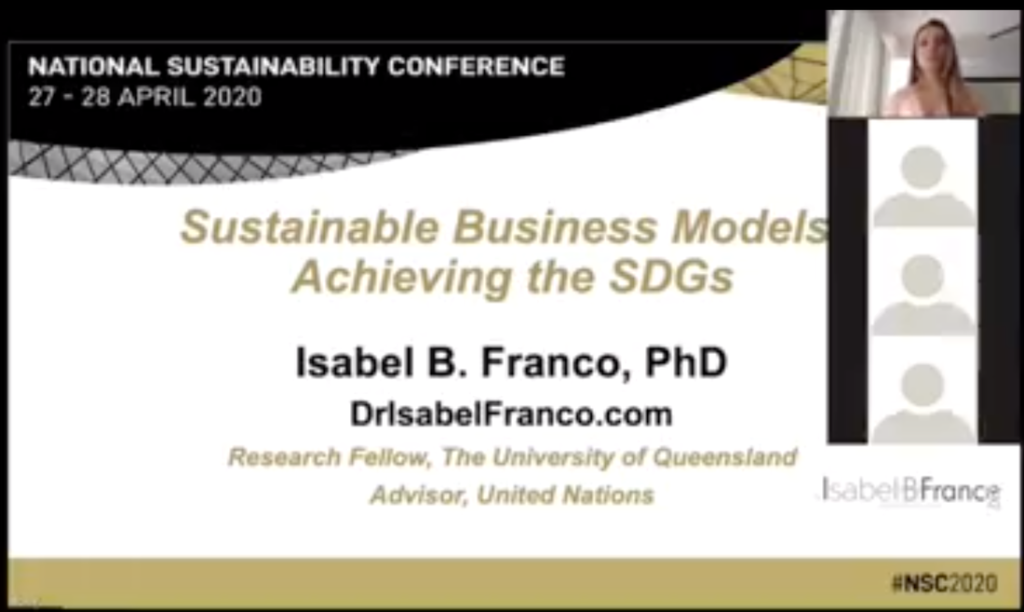
Impact: I participated in the in National Sustainability Conference 2020 that took place in Brisbane, Australia. The conference aimed to gather stakeholders (industry, governments, civil society organisations) interested in exploring sustainable solutions for a New Decade. The event was also designed to inform stakeholders on the latest developments, research and insight in economic, environmental and social sustainability. I was given the opportunity to share policy-relevant research outcomes on sustainable business models and the achievement of the SDGs. My presentation was grounded on ongoing work undertaken with colleagues at United Nations ESCAP.
Participant Stakeholders
- National Sustainability Conference, Australia
- UNESCAP
- The University of Queensland, Australian Institute for Business and Economics (AIBE)
Outcome: The presentation can be consulted in the link below:
Sustainable Business Models: Corporate Approaches to Achieve the SDGs
National Sustainability Conference
The University of Queensland · Australia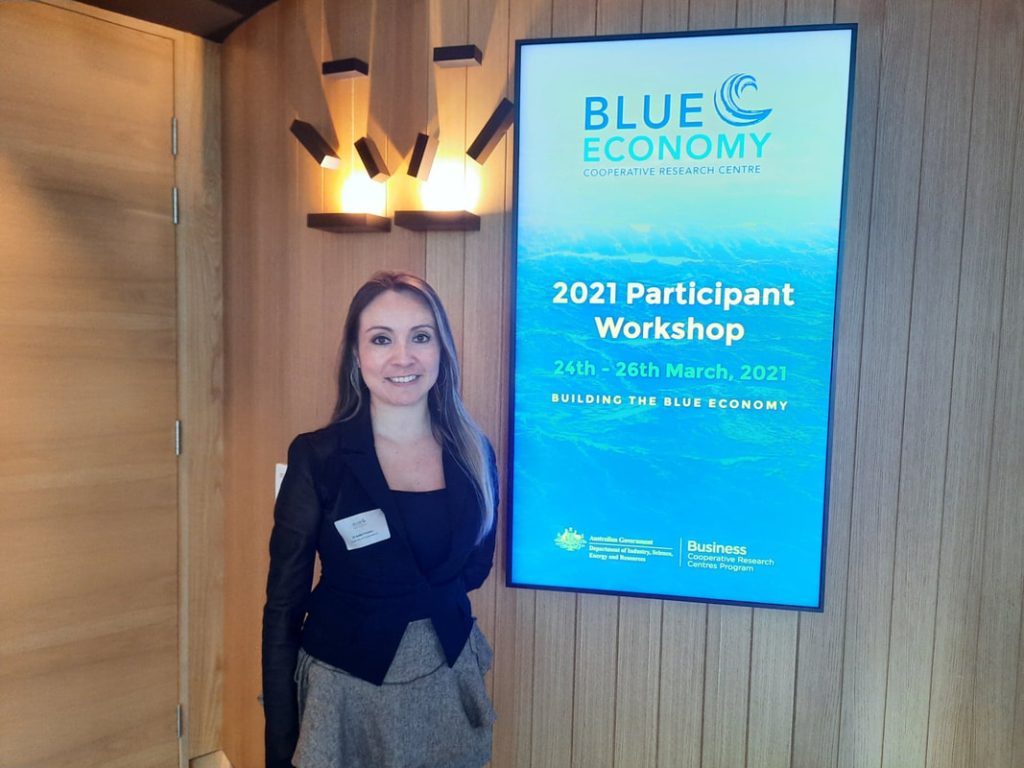
Impact: I participated in a workshop organised by the Blue Economy Cooperative Research Centre (CRC). The workshop aimed to find solutions to meet global demand for food and energy by bringing together the aquaculture and renewable energy sectors.
Participant Stakeholders
- Blue Economy CRC
- The University of Queensland, Australian Institute for Business and Economics (AIBE)
LedHers
The University of Queensland · Australia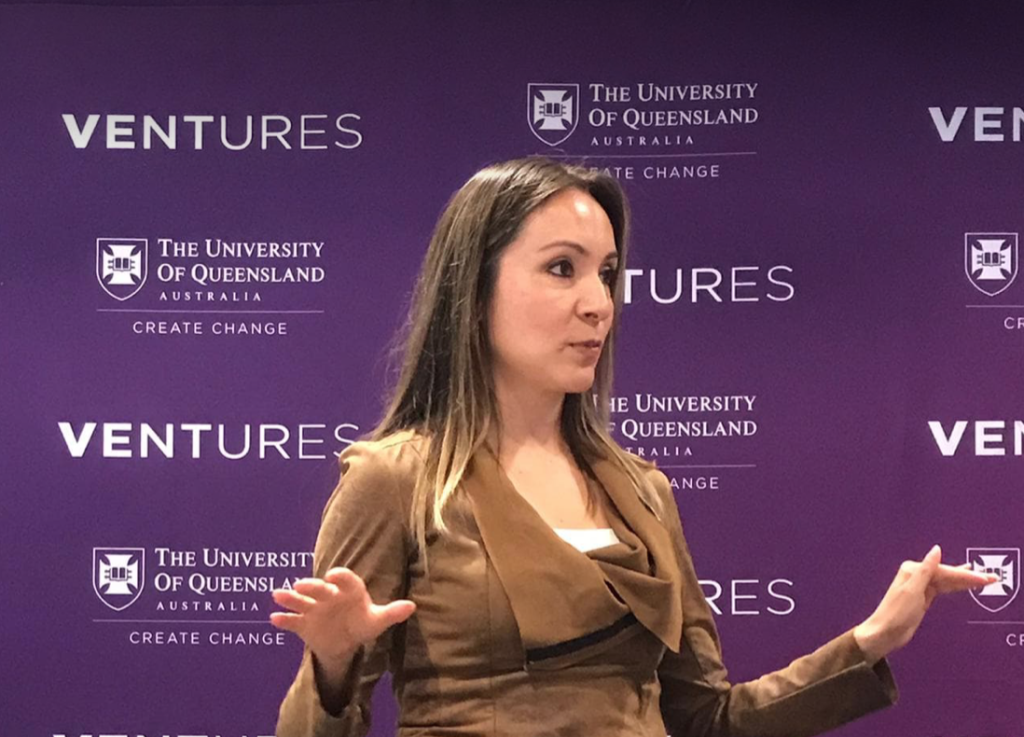
Impact: I was invited to give a talk to female, early career researchers at the LedHers Session at the University of Queensland. Some questions I addressed over the talk were as follows:
– What are you most proud of your career?
– What was the most challenging moment of your career?
– What is your best piece of advice. for how to confidently branch out into other career pathways?
– Why do you think it is important to have more female research leaders in all different industries and organisations?
Participant Stakeholders
- The University of Queensland, Global Engagement
- The University of Queensland, Early Career Researchers
- Australian Institute for Business and Economics (AIBE)
Global Stakeholder Networks for Impactful Sustainability Research and Education
Tokyo, JapanImpact: In collaboration with the United Nations University-Institute for the Advanced Study of Sustainability and Keio University, I delivered an academic seminar on the project ‘Stakeholder Networks for Impactful Sustainability Research and Education. A research study fully funded by the Japan Society for the Promotion of Science (JSPS). Major findings discussed on the seminar, are as follows:
1. Findings show that participant stakeholders globally perceived the SDGs listed below as existing gaps and therefore areas that required major attention.
- SDG 1 No Poverty
- SDG 2 Zero Hunger
- SDG 3 Good Health and Wellbeing
- SDG 10 Reduced Inequalites
2. Interestingly, research findings also showed that stakeholders are required to build capacity in the SDG areas listed below:
- SDG 4 Quality Education
- SDG 8 Decent Work and Economic Growth
- SDG 9 Industry, Innovation and Infrastructure
- SDG 10 Reduced Inequalities
- SDG 11 Sustainable Cities and Communities
- SDG 15 Life on Land
- SDG 16 Peace Justice and Strong Institutions
- SDG 17 Partnerships for the Goals
3. Research findings also show that the governance environment, lack of resources, context and academic constrains are perceived as limiting factors that prevent stakeholders from achieving the sustainable development goals.
Participant Stakeholders and Investors:
- eWisely Japan
- Social Innovation Japan
- United Nations University – Institute for the Advanced Study of Sustainability
- Keio University
- Japan Society for the Promotion of Science
Outcome: Click on the TV Show (video) to attend the seminar.
Exceptional Women in Sustainability Forum
eWisely Forum Japan · Tokyo, Japan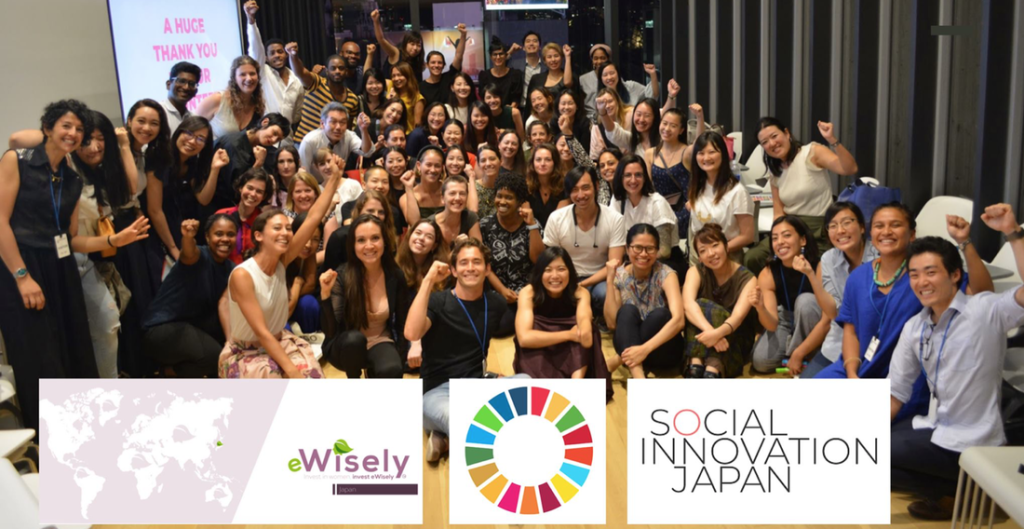
Impact: What role do women play in sustainability? How are women represented, and what barriers do they face in disruptive industries and challenging environments?
What is the link between industry and socio-environmental sustainability issues?
What challenges do women entrepreneurs in sustainability face and what are the implications on their livelihoods?
These were some of the questions addressed in the forum. An interdisciplinary event for discussion on case studies, impact research and entrepreneurial endeavours concerning women, sustainability, leadership and SDGs.
Participant Stakeholders and Investors:
- eWisely Japan
- Social Innovation Japan
- United Nations University – Institute for the Advanced Study of Sustainability
- Bunka Fashion Collage
Outcome: A TV show presenting the forum highlights can be found in the link below:
eWisely Forum Japan
Sustainable and Inclusive System Model for Educational Improvement" Symposium
Tokyo, Japan
Impact: Lessons to be learned:
a) The international community should pay nuanced attention and mobilise resources to improve quality education for all, disabled children, girls, ethnic and language minorities and poor childrenb) The education sector needs to further push boundaries to achieve the SDGs and create impact at the local level
c) Multi-stakeholder collaboration for sustainable education is key, particularly in disadvantaged contexts in Asia and Africa
Stakeholders and Collaborators:
- UNESCO
- United Nations University- Institute for the Advanced Study of Sustainability (UNU-IAS)
- The Centre for the Study of International Cooperation in Education”
Community Capacity-building for Sustainable Development
Scientific Research Outcome · Japan-Australia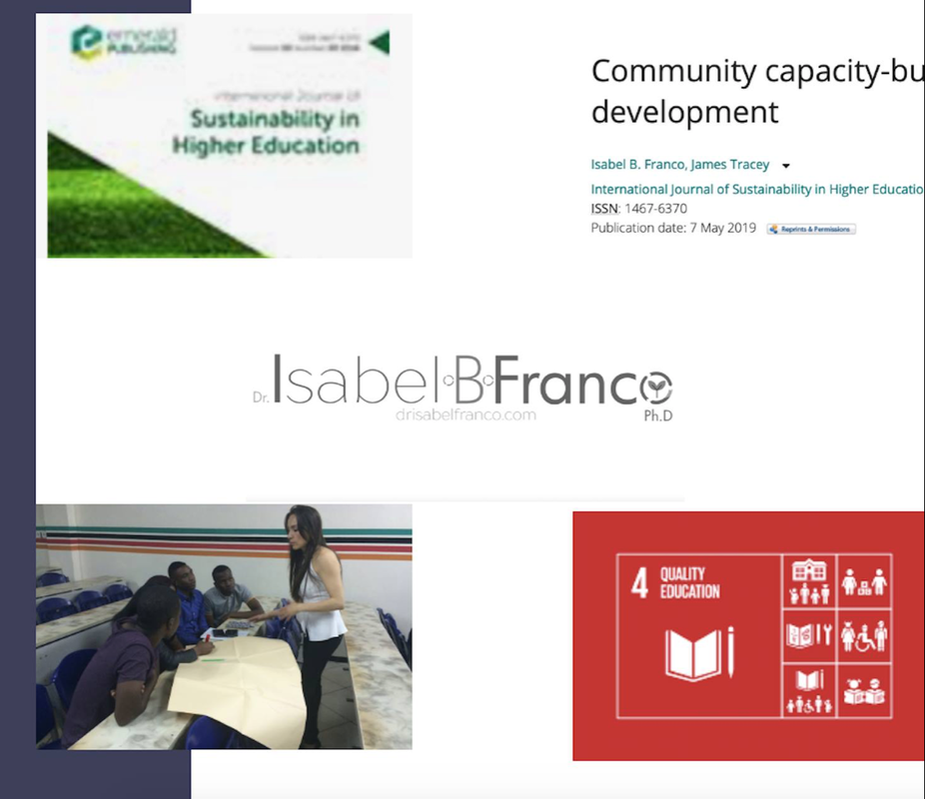
Impact: I am pleased to announce that our latest scientific outputs have been published in the International Journal of Sustainability in Higher Education. In collaboration with the University of New South Wales our investigation found that improving identified CSD priority areas, aligned with the Sustainable Development Goals seems to be the most effective strategy to enhance the ability of local communities to overcome sustainability challenges over time. SDGs 9, 4, 15, 16, 17 and 8 were identified as the areas of greatest significance for practical CSD.
Participant Stakeholders and Investors:
- United Nations University – Institute for the Advanced Study of Sustainability
- University of New South Wales
Outcome: The article can be downloaded in the link below:
https://www.emerald.com/…/10.1…/IJSHE-02-2019-0052/full/html
Global Stakeholder Networks for Impactful Research and Education for Sustainable Development
Tokyo, Japan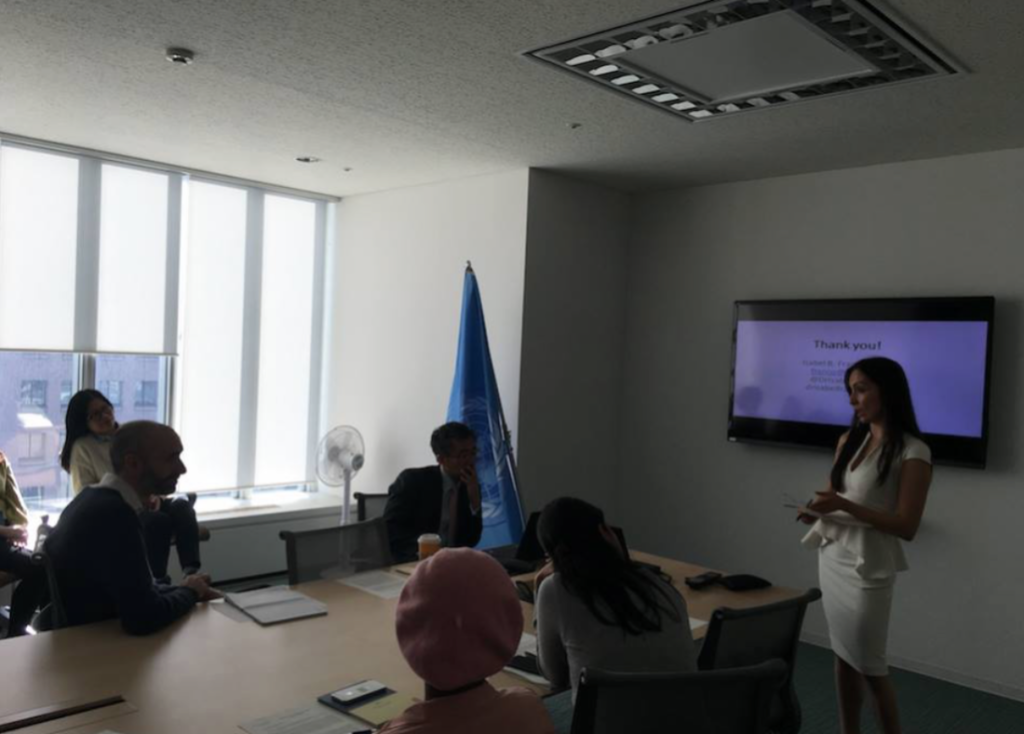
Impact: I shared research findings in the field of Education for Sustainable Development. The reserach projects titles: “Global Stakeholder Networks for Impactful Research and Education for Sustainable Development” Findings were well received by colleagues at the United Nations University.
Some lessons to be learned by higher education institutions and their stakeholders, are as follows:1. SDG 10: Reduced Inequalities is becoming a major trend in education for sustainable development globally.
2. SDG 4: Quality Education is percieved as an impactful area in education for sustainable development.
3. Governance issues and limited resources in the global south remain critical issues and need to be addressed through international cooperation and knowledge transfer.
4. Mobilising resources to address the above mentioned issues and stronger partnerships (SDG: 17 Partnerships for the goals) can promote inclusive and impactful education and research for sustainable development.
Stakeholders and Collaborators:
UNU – United Nations University – Institutte for the Advanced Study of Sustainability.
Women in the C-Suite
SDG 4 Gender Equality · Impact Sustainability – Japan, Asia & Canada, Americas · Japan-Canada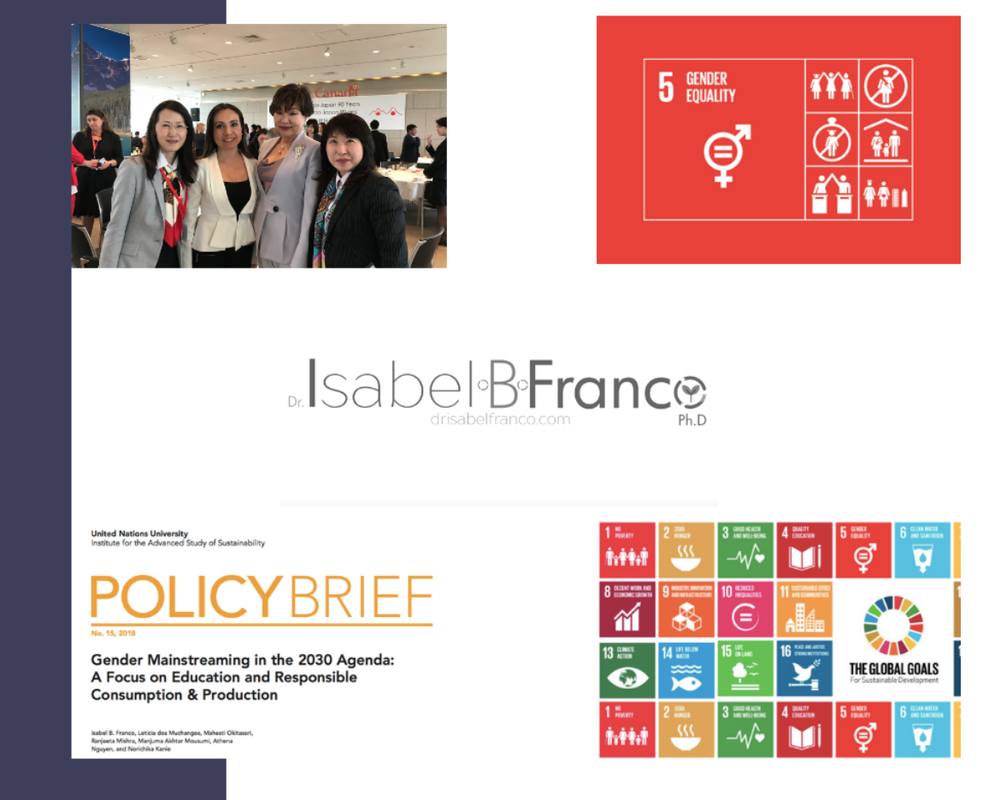
Impact: The first Canadian Women’s Mission was in Japan this week. Women in politics, scientists, entrepreneurs and corporate executives got together to discuss investment opportunities to foster the participation of women in the C-Suite, in both regions. Participants agreed that the areas that need major attention in the achievement of SDG 5 Gender Equality in both countries, are as follows:
- Senior management commitment
- Sponsorship opportunities
- Unconscious bias
- Women development opportunities
- Organizational change
- Men’s awareness
Other recommendations towards the achievement of SDG 5 can be found in my latest policy report ‘Gender Mainstreaming in the 2030 Agenda’. In collaboration with UNU colleagues, our policy-relevant research has found that achieving SDG 4 Quality Education and SDG 12 Sustainable Consumption and Production can contribute to foster women’s participation in the C-suite across various industries and the overall achievement of SDG 5 Gender Equality.
Participant Stakeholders and Investors:
- United Nations University – Institute for the Advanced Study of Sustainability
- Canadian Embassy in Japan
Sustainability Symposium
United Nations University – Institute for the Advanced Study of Sustainability · SDG 17 Partnerships for the Goals · Tokyo, Japan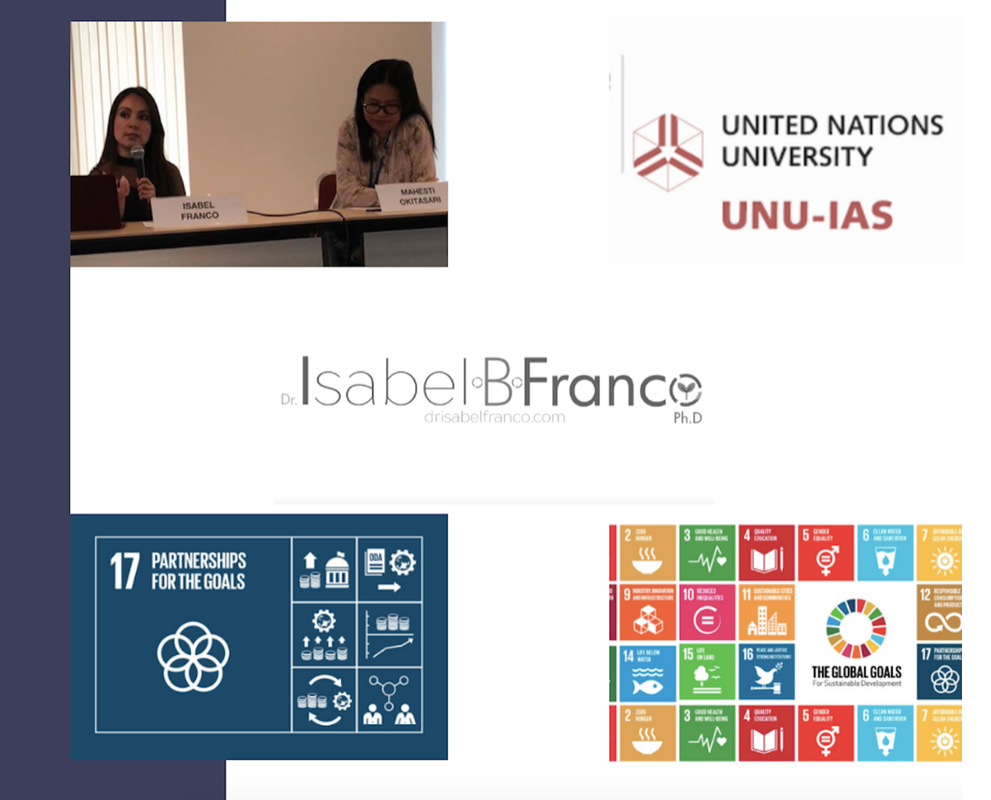
Impact: The Sustainability Research Symposium took place in Tokyo Japan and aimed to showcase impact research in alignment with the sustainable development goals (SDGs) and conducted at the United Nations University. Alongside with UNU-IAS colleagues, I was invited to participate in the panel session to discuss various issues on sustainability science, policy and practice, at the global and local levels of governance.
Click here to watch the TV Show on the Discussion Panel.
Participant Stakeholders and Collaborators
– United Nations University – Institute for the Advanced Study of Sustainability
UN Sustainability Leadership Seminar
Tokyo, JapanTopic: Think Local, Lead Global: Sustainability Leadership Seminar
Impact: Early this month I connected with young leaders in Tokyo, Japan at the International Seminar Series on sustainability, organized by the United Nations University, Institute for the Advanced Study of Sustainability. Our Common Future is their future. Let’s be consistent and ‘meet the needs of the present without compromising the ability of future generations to meet their own needs.” (Brundtland Report, 1987). In this TV show young leaders give us a lesson on SDGs interlinkages in Japan.
Participant Stakeholders and Collaborators
– United Nations University – Institute for the Advanced Study of Sustainability
Asia-Latin America Research Collaboration on Sustainable Energy: Women Have Sustainable Energy to Boost
Latin America – Asia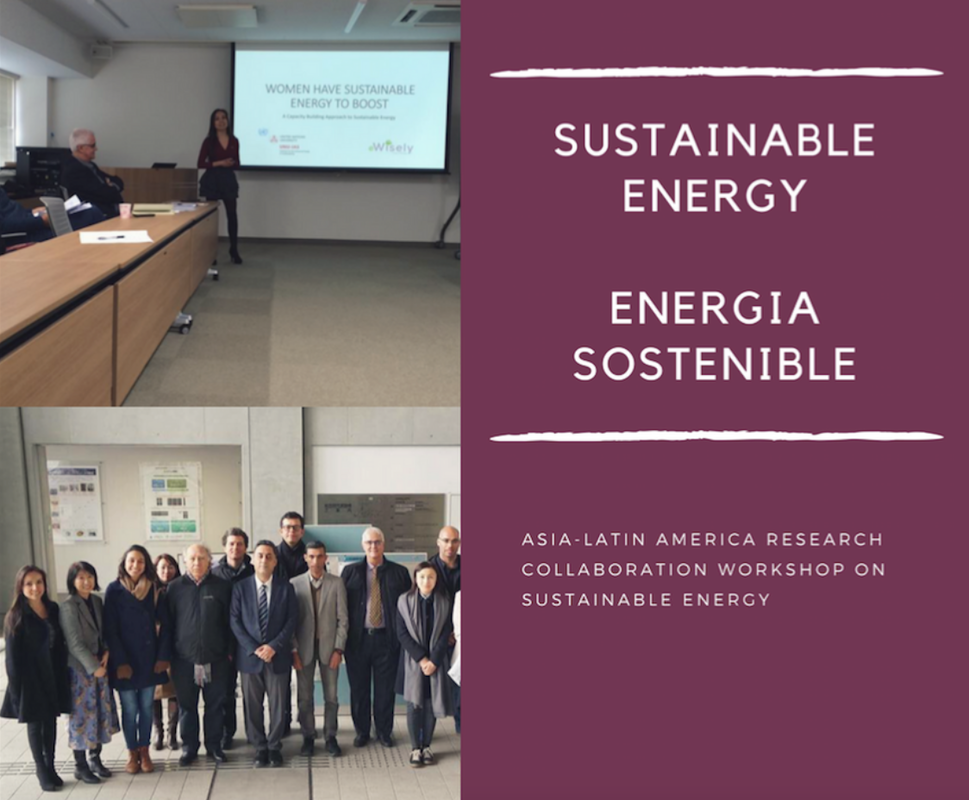
Impact: Alongside sustainability scientists from Latin America and Asia, I was invited as a speaker at the Asia-Latin America Research Collaboration workshop on sustainable energy that took place at Kyoto University. I presented my work “Women have Sustainable Energy to Boost: An Approach to Energy Consumption. The study shows that more attention is needed in priority areas, as follows:
– Gender aspects of sustainable energy need to be taken seriously
– Unresolved governance issues in the transition from fossil fuels to renewables
– Fostering sustainable lifestyles
Stakeholders and Collaborators:
- Kyoto University
- NU-IAS United Nations University – Institute for the Advanced Study of Sustainability
- The University of Tokyo
- Japan Women University
- UTS Sydney
- IGES
- University of São Paulo
- FGV
- RITE
Meeting with the Ambassador of Pakistan to Japan
Pakistan – JapanImpact: Mrs and Mr. Anam Ambassador of Pakistan to Japan opened the doors of their home at the Embassy of Pakistan to Japan to host an informal gathering to discuss issues concerning about women, diplomacy and the role of the Pakistani Embassy in Japan. Was honoured to have shared some thoughts on sustainability issues and connections with Japan and Pakistan.
Participant Stakeholders and Investors:
- Embassy of Pakistan in Japan
- United Nations University – Institute for the Advanced Study of sustainability
How to Action the SDGs?
Lecture at the United Nations University · Tokyo, JapanImpact: In a lesson I gave to Doctorate and Master Sustainability Students at the United Nations University, I conducted an activity to demonstrate that actioning SDGs depends on the context in which we operate. I recommend you to watch the video to the end to find out more about current SDGs trends in Asia-Pacific, Africa and the Americas. SDGs trends and gaps are linked to the context. This applies to all sectors: industry, government, universities, NGOs, among others.
Participant Stakeholders and Investors:
- United Nations University – Institute for the Advanced Study of Sustainability
Socially Responsible Business: A Model for a Sustainable Future
Bangkok, Thailand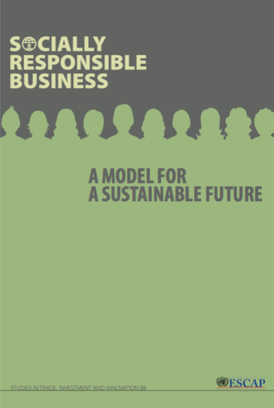
Impact: I am delighted to present our latest book ‘Socially Responsible Business: A Model for a Sustainable Future’. The book co-author in collaboration with Dr. Abe and our supportive reserach team was recently published by the United Nations ESCAP. This book identifies priority areas for socially responsible business and recommends stakeholders on ways to address pressing corporate sustainability challenges to meet the 2030 Agenda for Sustainable Development.
The book draws recommendations for private and public stakeholders. Boosting capacity in the areas listed below can assist stakeholders in operating sustainably and in alignment with long-term economic, social and environmental objectives at the global and local levels:
– Fostering SRB
· Corporate governance
· Multi-stakeholder engagement
· Corporate disclosure
· Corporate sustainability
· International cooperation
· Voluntary guidelines and benchmarking
The book can be downloaded from:
Abe, M & Franco, I (2017). Socially Responsible Business: For A Sustainable Future. Bangkok: United Nations Economic and Social Commission for Asia and The Pacific
Participant Stakeholders and Collaborators:
- Dr. Isabel B. Franco, UNU – IAS (United Nations University – Institute for the Advanced Study of Sustainability)
- Dr. Masato Abe, UN ESCAP (United Nations – Economic and Social Comission for Asia and The Pacific)
Socially Responsible Business: A Model for a Sustainable Future
Okayama, Asia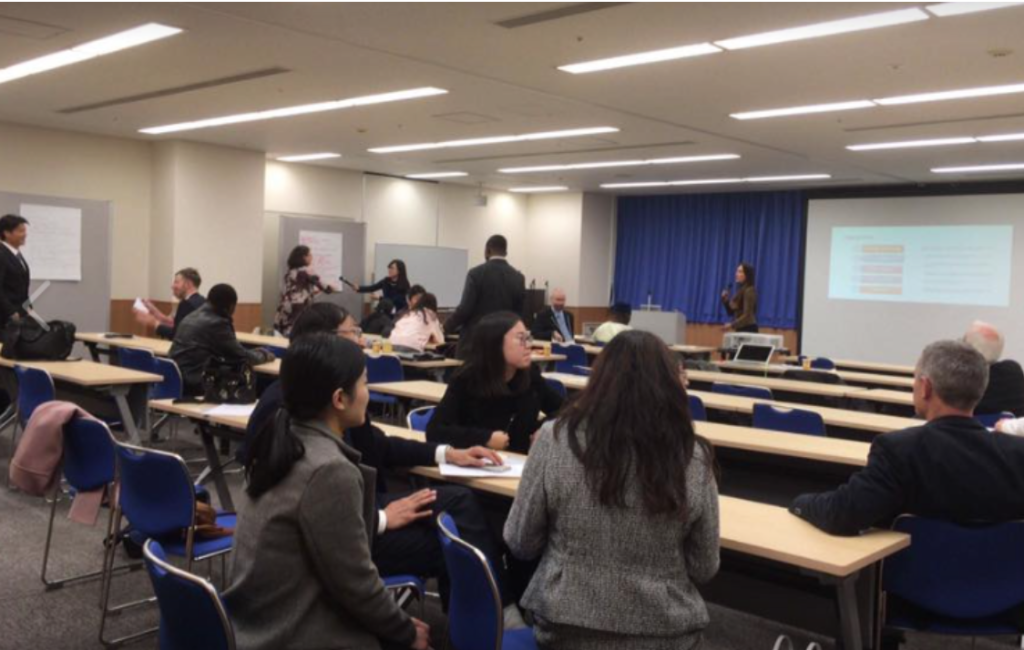
Impact: I recently delivered the consultation workshop ‘ From Climate Education to Action’. The workshop took place at the first Thematic Conference on Education for Sustainable Development: Achieving the Global Goals, organised by the United Nations: Institute for the Advanced Study of Sustainability. Participants agree that the stakeholders should join efforts and create an impact on the following areas:
– Commitment to the youth
-ICT and innovation for sustainable lifestyles
– Collaboration between parties to achieve the Sustainable development Goals.
– Good Governance for the implementation of the Sustainable Development Goals in Higher Education.
Participant Stakeholders and Collaborators:
- Regional Centres of Expertise on Sustainable Development
- (United Nations University – Institute for the Advanced Study of Sustainability)
Education for Sustainable Development: A Traditional Knowledge Perspective
Okayama, Japan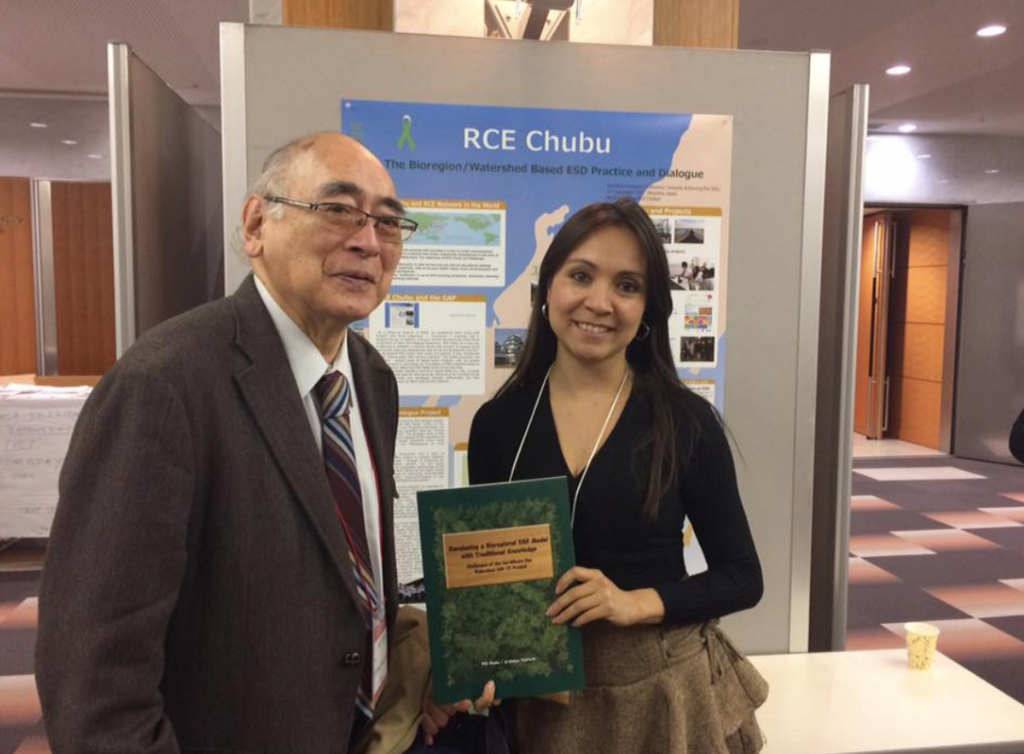
Impact: I had the opportunity to meet a former Director of the United Nations University – Institute for the Advanced Study of Sustainability during the launch of his book ‘Bioregional Education for Sustainable Development: A Traditional Knowledge Model on Education for Sustainable Development’. Some lessons learned from the book, as follows:
- Global trends on education for sustainable development and traditional knowledge
- Case Study compilation and technology transfer, urban farms and environmental sustainability.
- Social Sustainability making use of traditional wisdom.
Participant Stakeholders and Collaborators:
- Regional Centre of Expertise on Sustainable Development Chibu, Japan
- (United Nations University – Institute for the Advanced Study of Sustainability)
Prof. Takeuchi Kazuhiko
Editor-in Chief Sustainability Science · Tokyo, JapanImpact: I was privilege to meet Prof. Takeuchi, Editor-in-Chief at Sustainability Science Journal. Prof. Takeuchi is also President at IGES with a broad interest in sustainability issues in African countries.
Participant Stakeholders and Collaborators:
- Sustainability Science, Springer
- IGES
Appointment United Nations University, Institute for the Advanced Study of Sustainability
Tokyo, JapanImpact: I was appointed policy researcher in sustainability to the United Nations University – Institute for the Advanced Study of Sustainability to lead the project ‘Global Stakeholder Networks for Impact Sustainability Research and Education’. This is a two year-project aimed to explore the impact of sustainability programs in curriculum, policy and practice globally. The project was funded for by the Japan Society for Promotion of Science (JSPS) postdoctoral fellowship.
Participant Stakeholders and Investors:
- United Nations University – Institute for the Advanced Study of Sustainability
Education for Sustainable Development
Shizuka, Japan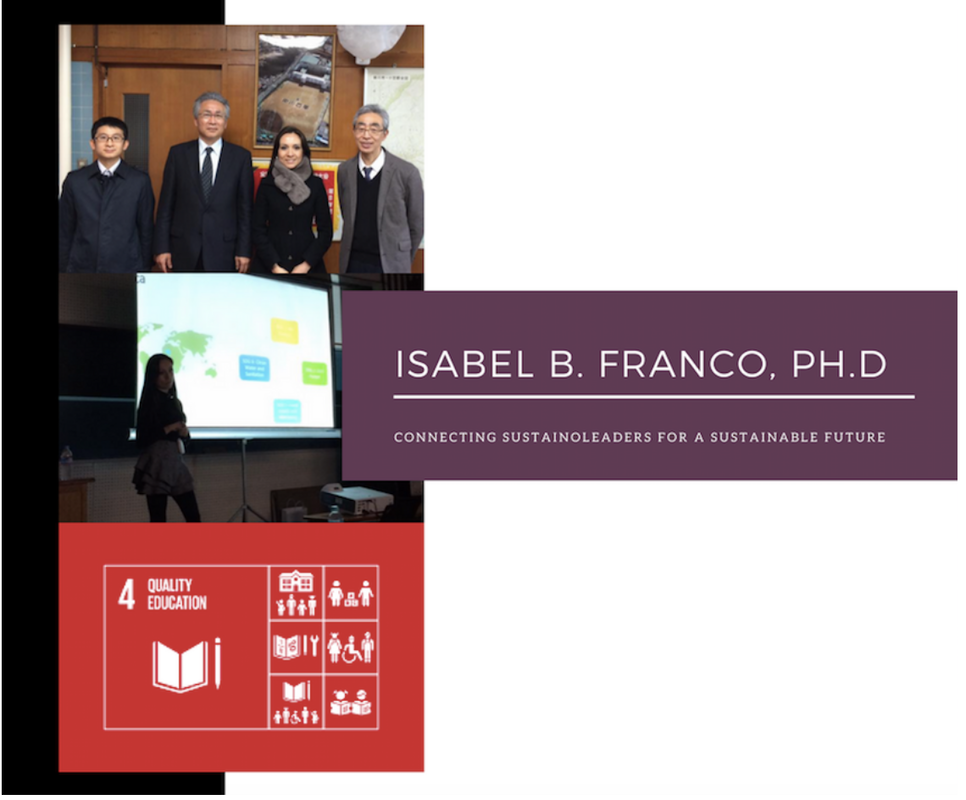
Impact: I delivered a lecture for young learners to create sustainable change and achieve #SDG4 Quality Education and interlinkages with other SDGs, such as #SDG5 Gender Equality. The lecture focused on global trends on education for sustainable development. Watch my TV show with the lecture here.
Participant Stakeholders and Investors:
- United Nations University – Institute for the Advanced Study of Sustainability
- Japan Society for the Promotion of Science
- Shizuka, Japan Prefecture
Education and research for Sustainable Development in Australia
Sydney, Australia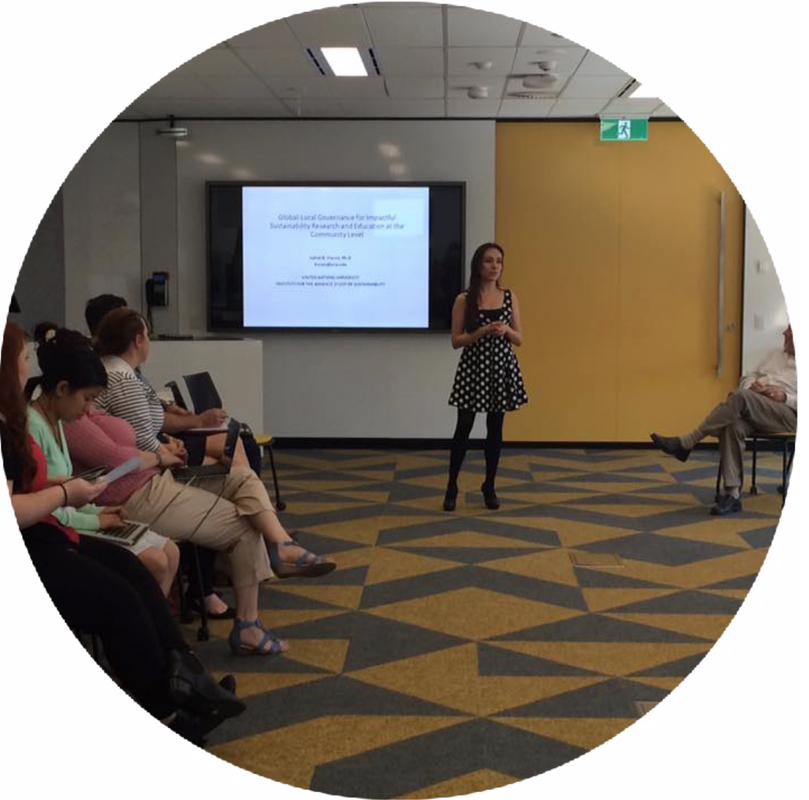
Impact: I conducted fieldwork in Sydney, Australia to explore stakeholders’ perceptions on ‘ Education and Research for Sustainable Development’. Participants agreed that involved stakeholders require greater knowledge on traditional knowledge and youth empowerment on education for sustainable development.
Participant Stakeholders and Collaborators
- United Nations University – Institute for the Advanced Study of Sustainability
- University of Western Sydney, RCE Network
- Private and public stakeholders and civil society organisations in Australia
Meeting Prof. David Malone, Rector at the United Nations University – Institute for the Advanced Study of Sustainability
Tokyo, Japan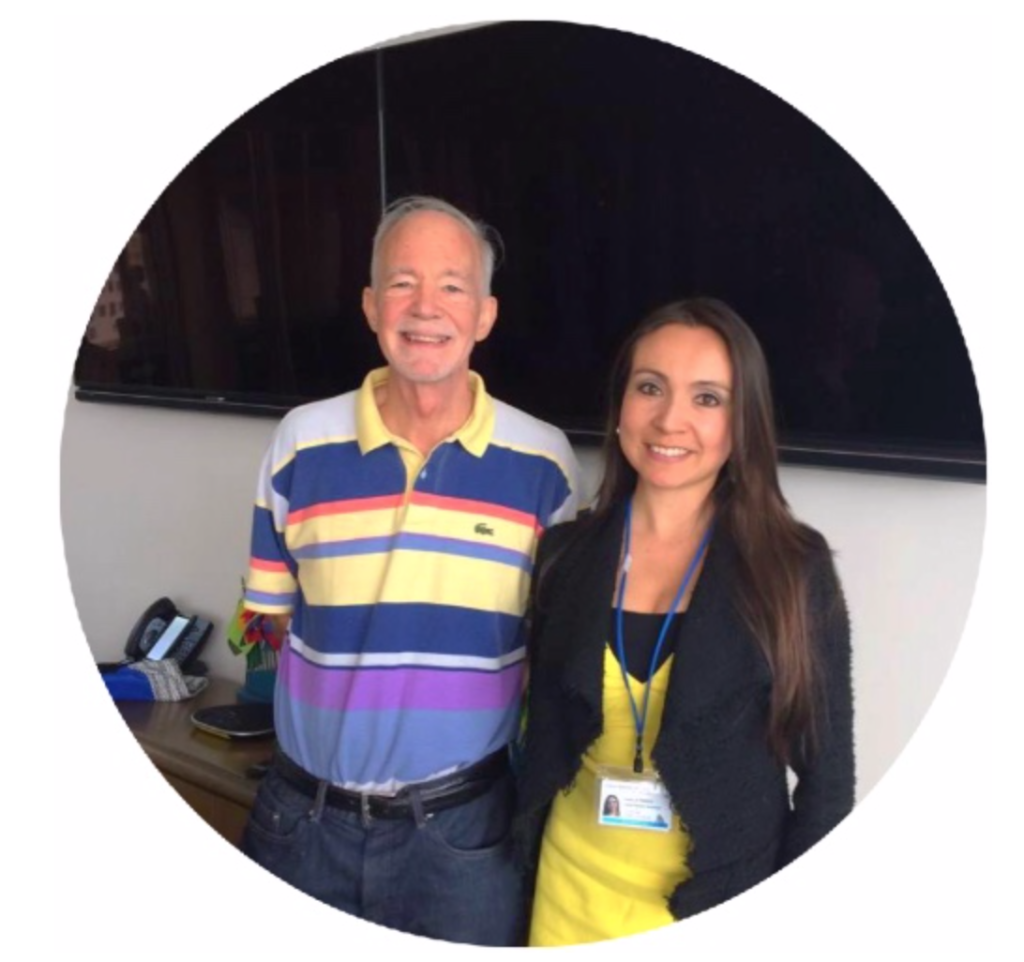
Impact: After joining the United Nations University, I had the opportunity to connect and share with Dr. Malone, Rector at the United Nations University – Institute for the Advanced Study of Sustainability (UNU). Dr. Malone, welcome researchers who had recently joined UNU. We researchers participated in a vibrant discussion on existing challenges on impact sustainability and the sustainable development goals. Some lessons learned, as follows:
- Interdisciplinary research models for the achievement of the sustainable development goals.
- Researchers’ flexibility to work on non-conventional fields and relevance of scientific studies.
- Join research efforts towards research impact strategies and policy-relevant research.
Participant Stakeholders and Collaborators
- United Nations University – Institute for the Advanced Study of Sustainability
Meeting Prof. Takemoto, Director at the United Nations University – Institute for the Advanced Study of Sustainability
Tokyo, Japan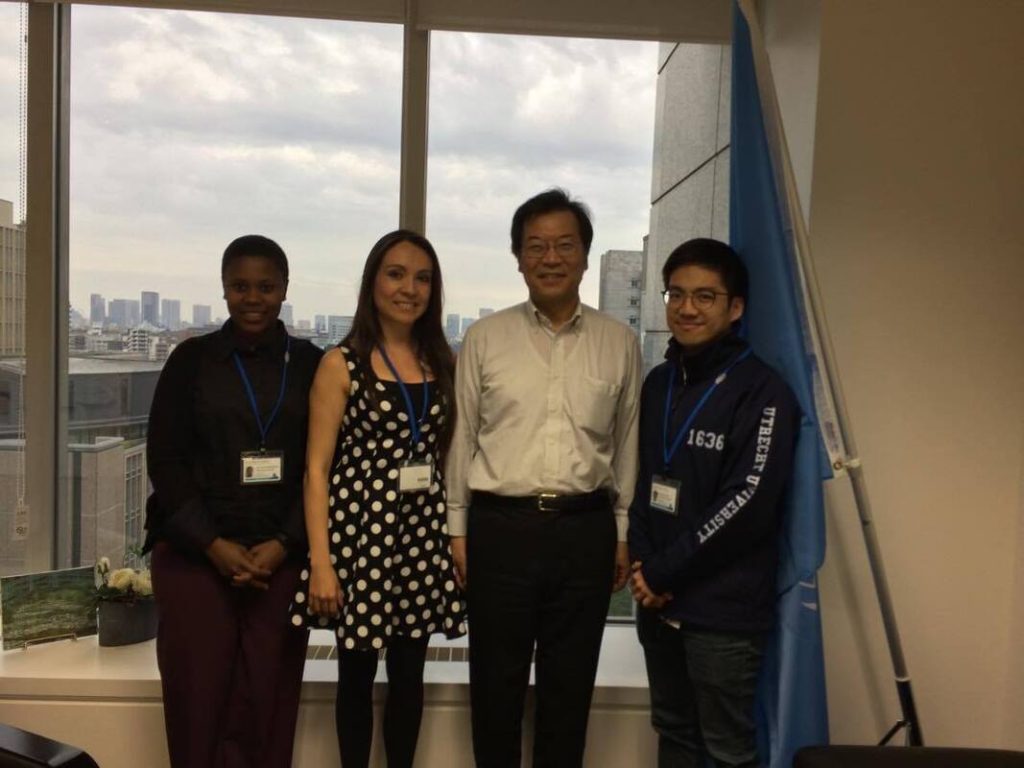
Impact: After joining the United Nations University, I also had the privilege to connect and engage in research collaboration with Dr. Takemoto, Director at the United Nations University – Institute for the Advanced Study of Sustainability (UNU). Find out more about our research collaboration ‘Higher Education for Sustainable Development’ published in Sustainability Science here.
Participant Stakeholders and Collaborators
- United Nations University – Institute for the Advanced Study of Sustainability
Education for Sustainable Development in Ibaraki, Japan
Ibaraki, Japan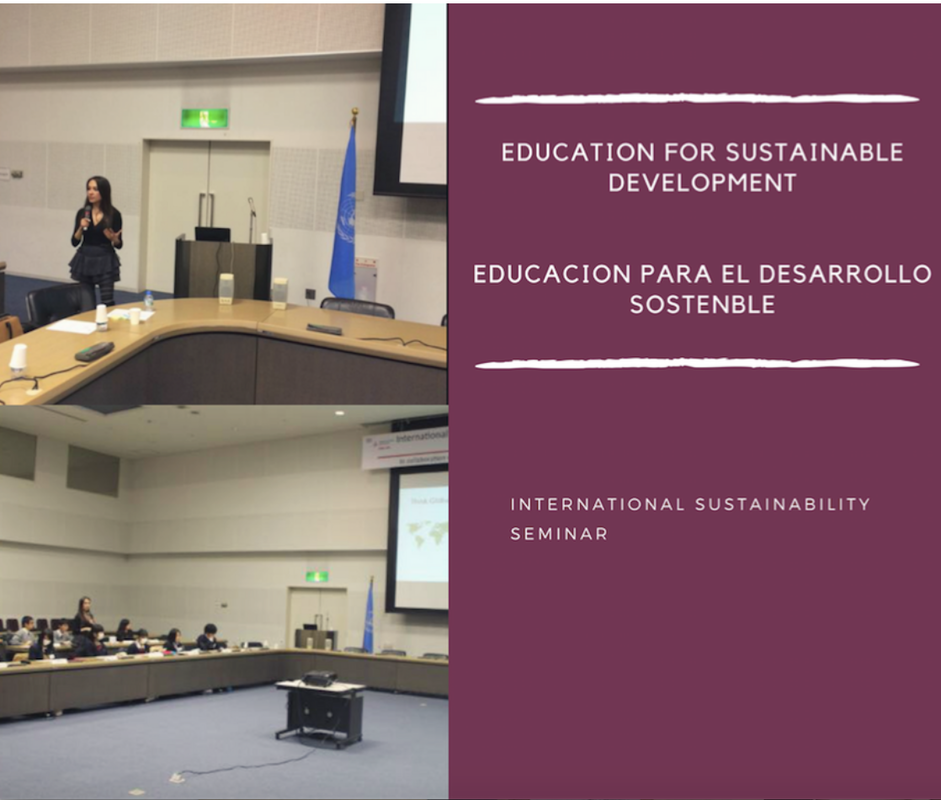
Impact: I delivered a lecture for young, Japanese learners on how to create sustainable change and achieve #SDG4 Quality Education. The lecture ‘Think global, lead local for sustainable development’, was delivered at the International Seminar Series in Sustainability.
Stakeholders and Collaborators:
- United Nations University- Institute for the Advanced Study of Sustainability (UNU-IAS)
- Ibaraki Prefecture, Japan
Interview with a woman leader in Kiribati, a Pacific Island severely impacted by climate change.
Kiribati, Pacific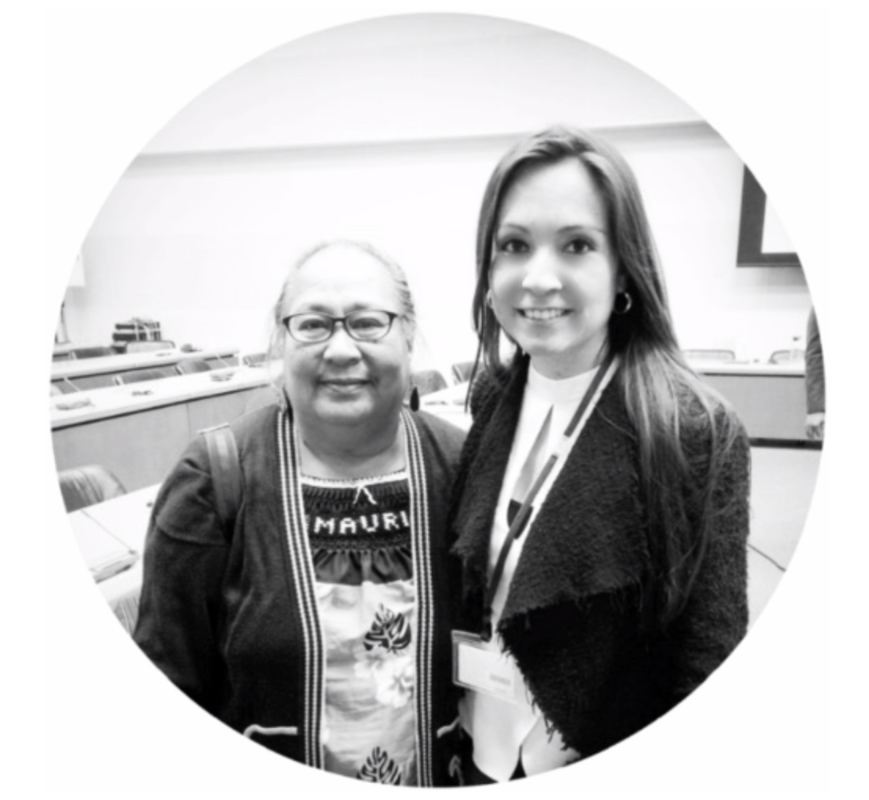
Impact: Interview with a woman leader from Kurabati, an island severely impacted by climate change. The interview is part of a visual ethnography about exceptional women in sustainability across the world. Over the interview, the interviewee indicated that major investment is required on education for sustainable development, so that women and girls can face the impacts of climate change.
Participant Stakeholders and Collaborators
- United Nations University – Institute for the Advanced Study of Sustainability
- Kiribati Government
- Exceptional Women in Sustainability – eWisely
The day I became Australian Citizen and SDG 10 Reduced Inequalities
Brisbane, AustraliaImpact: I arrived in Australia a few years ago with a bag full of dreams… it has been a wonderful journey full of dreams come true and lessons learned. I feel honoured to be part of a country that welcomes diversity and gives you the opportunity to shine if you are willing to work for it. Hard work has certainly paid off and today I embrace my Australian Citizenship with gratitude, humbleness and pride. I am pleased to announced I was conferred my Australian Citizenship yesterday at the Citizenship Ceremony led by Lord Mayor of Brisbane Graham Quirk. Thanks to all of you who have been part of this amazing journey! I am very proud to be Australian-Colombian – a global citizen. Let’s advocate for SDG 10 Reduced Inequalities, so that others can benefit from what the world has to offer!
Participant Stakeholders and Investors:
- Brisbane City Council
TV Show: Exceptional Women in Sustainability
Guest: Jyoti Sedhain, eWisely Nepal · NepalImpact: Exceptional Women in Sustainability – eWisely Nepal (Interpretado en Espanol)
Thank you Jyoti Sedhain for your contribution! Hopefully more women in sustainability take the lead to tackle pressing sustainability issues (e.g.climate change, community forestry etc) impacting on women and surrounding communities in Nepal and across the world. In this episode the leader for eWisely Nepal shares latest research finding on gender aspects of climate change and community forestry in Nepal.
Participant Stakeholders and Investors:
- Jyoti Sedhain, eWisely Nepal
- United Nations University – Institute for the Advanced Study of Sustainability
TV Show: Exceptional Women in Sustainability
Guest: Anuska Joshi, eWisely Nepal · NepalImpact: Exceptional Women in Sustainability – eWisely Nepal (Interpretado en Espanol)
Anuska Joshi, one of our leaders at eWisely Nepal shares some insights about her research on SDG 13 Climate Change and community groups in Nepal. We also take this opportunity to announce the beginning of the connector eWisely Nepal.
Participant Stakeholders and Investors:
- Anuska Joshi, eWisely Nepal
- United Nations University – Institute for the Advanced Study of Sustainability
Australia-Latin America Business Council
End of the Year Event · SDG 17 Partnerships for the Goals · Australia – Latin America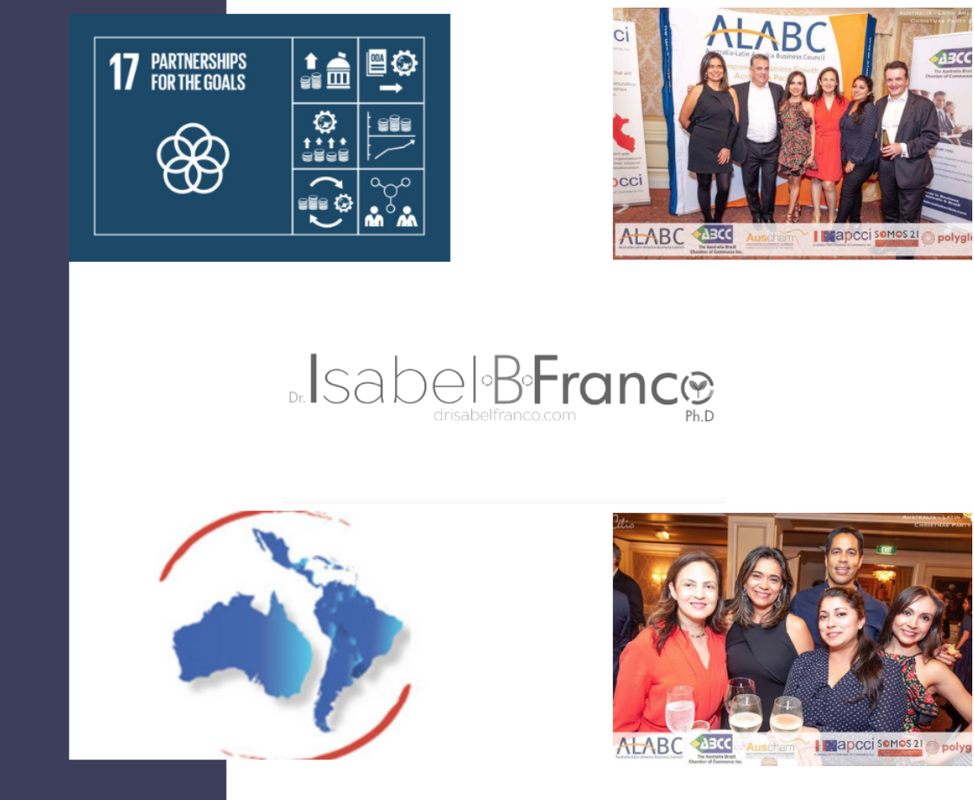
Impact: I feel proud to have become a connector of two worlds: Australia and Latin America. I still recall the time when I became Latin American Student Ambassador to Australia…I was one of the a few latinas being awarded a PhD scholarship in Australia at that time. This month (and a few years later) I reconnected with business leaders from both regions. These exceptional leaders have managed to foster sustainable business and connections between two apparently dissimilar cultures. Thanks to Australia Latin-America Business Council (ALABC) for making this regional connection possible.
Participant Stakeholders:
Australia-Latin America Business Council (ALABC), ABCC, AUSCHAM,
Australia-Latin America Business Community
'Higher Education for Sustainable Development: Actioning the Global Goals in Policy, Curriculum and Practice'
Japan
Impact: We are pleased to share the publicaton of the study ‘Higher Education for Sustainable Development: Actioning the Global Goals in Policy, Curriculum and Practice’
The study shows that Higher Education for Sustainable Development (HEfSD) is being significantly shaped by the global sustainability agenda. Higher education and its stakeholders more than ever experience complexities to implement global policy and create local impact. This predicament does not only champion the global sustainability rethoric but also exacerbates the complexities between human and environmental interactions at the local level. Research findings suggest that the advancement of HEfSD depends largely on a better understanding of existing HEfSD policy and impact both, in the scholarship and the practicality. Thus, the major contribution of this study is the identification of current HEfSD trends and priority areas for HEfSD impact in alignment with the Sustainable Development Goals (SDGs). This attempt to translate HEfSD policy into impact will hopefully guide higher education and its stakeholders in HEfSD implementation and provide scholars, higher education leaders, government policy makers and civil society organizations with some conceptual and practical tools to consider strategically how global HEfSD policy can be successfully implemented at the local level.
The study can be downloaded in the link below:Franco, I; Saito, O; Vaughter, P; Whereat, J; Kanie, N; Takemoto, K (2018). Higher Education for Sustainable Development: Actioning the Global Goals in Policy, Curriculum and Practice. Sustainability Science. 1-22.
Participant Stakeholders:
United Nations University – Institute for the Advanced Study of Sustainability
University of Western Sydney
University of Zambia
University of Okayama
World Circular Economy Forum
Japan – Finland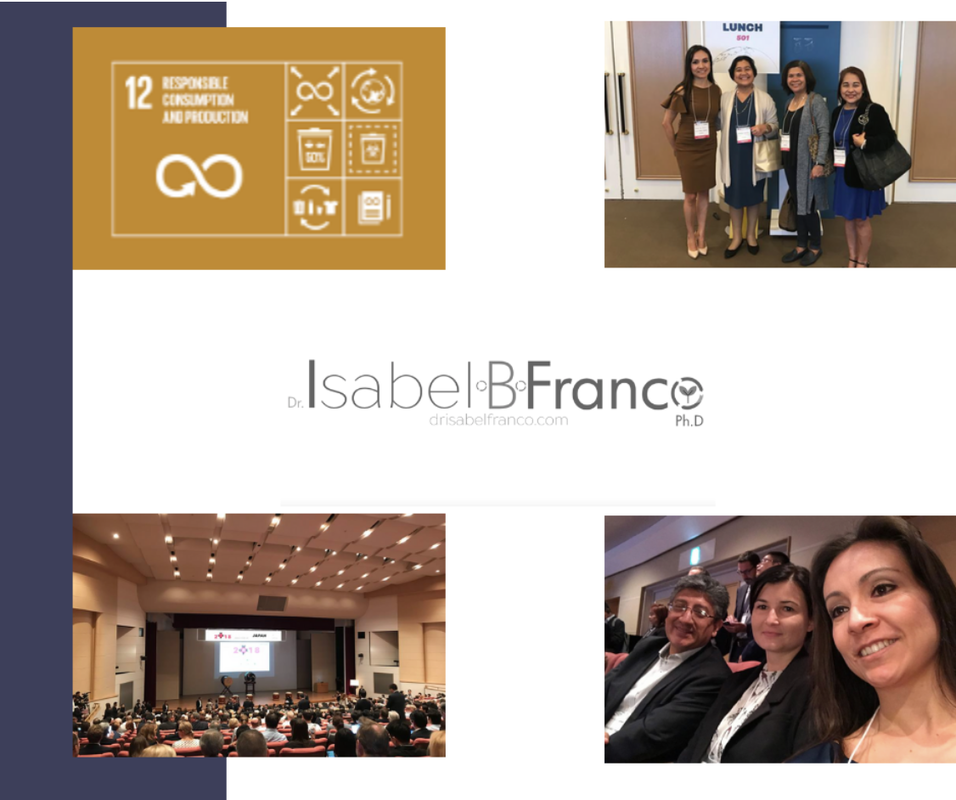
Impact: I had the opportunity to be part of the World Circular Economy Forum, co-organised by selected international partners in Yokohama (Greater Tokyo Area), Japan. The WCEF2018 focused on building the future visions for the circular economy. Topics that were discussed include economic benefits and social equity of the circular economy, energy and climate solutions for a circular economy, global value chains and circular trade, as well as shared mobility and circular solutions for reducing marine plastic waste. Women in Sustainability across the globe participated actively in the event.
Participant Stakeholders:
Finnish Innovation Fund SITRA and MInistry of Environment of Japan
How can we build lasting collaboration that places women at the centre of sustainability agendas?
India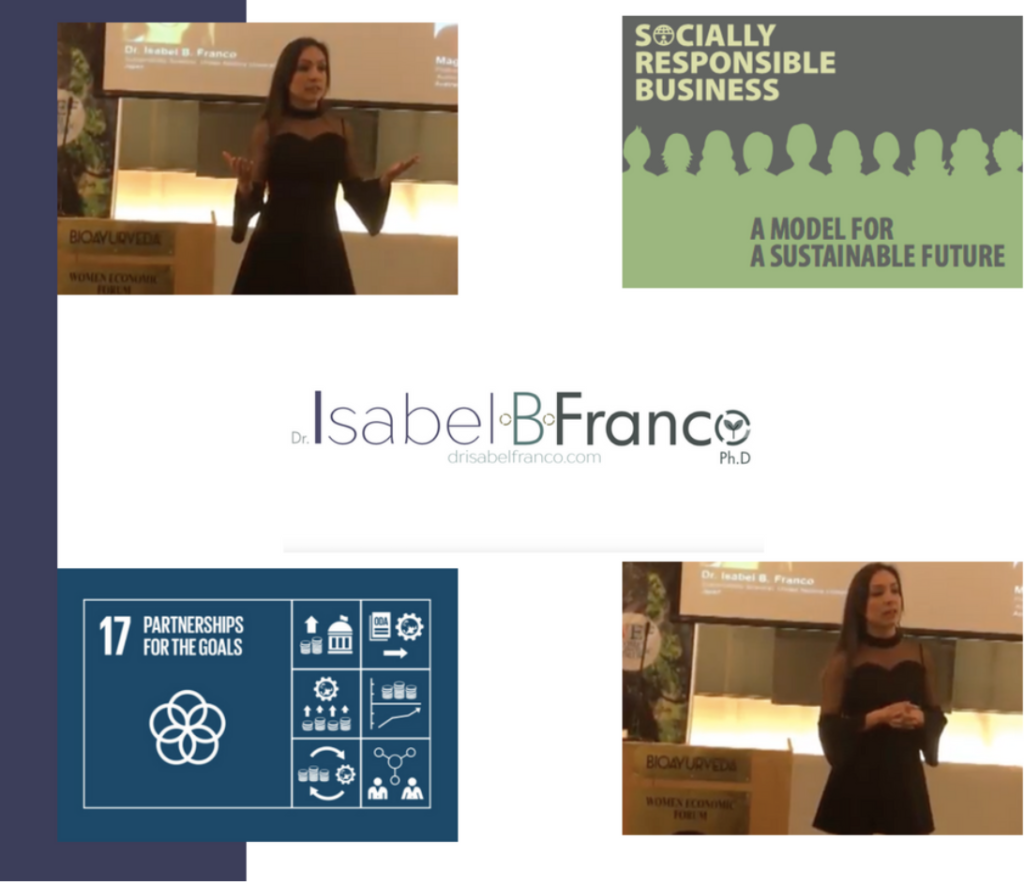
Impact: How can we build lasting collaboration that places women at the centre of sustainability agendas? I gave a lecture at the Women Economic Forum on how multiple stakeholders coming from various sectors can engage in socially responsible business practices to foster partnerships and drive gender equality. Selcted cases and best practices were highlighted in this lecture. Watch video below.
Video: How can we build partnerships for gender equality?
Participant Stakeholders:
United Nations University – Institute for the Advanced Study of Sustainability
Women Economic Forum
Exceptional Women in Sustainability
Australia-Japan Diplomacy Research Forum
Japan – Australia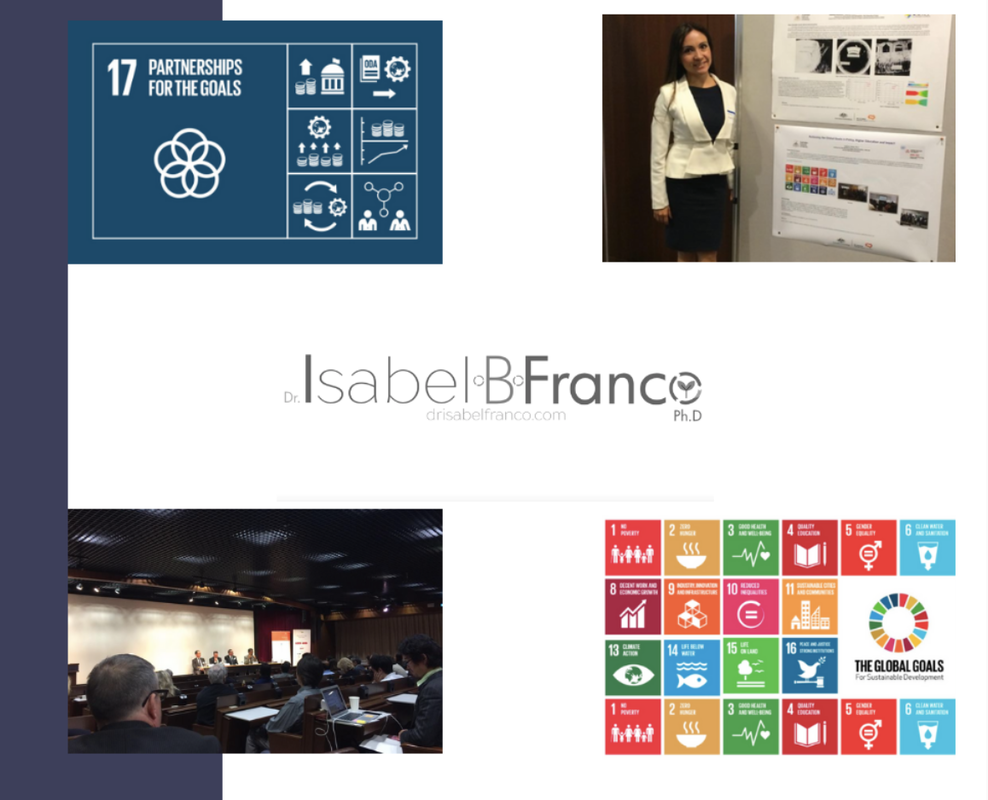
Impact: I was given the opportunity to present latest research findings on Japan-Australia Diplomacy Research Forum. The Forum brings together researchers, the public sector and the business community to provide updates on a range of global issues that require public policy responses and scientific collaboration. It also provides better informed policy and innovative solutions. Those areas include, among other topics, energy policy, climate change and the environment, ageing and public health as well as key areas to foster Australia-Japan impact industry-research collaboration.
Participant Stakeholders:
Australia National University
University of Tokyo
Rio Tinto
Gender Mainstreaming in the 2030 Agenda: A Focus on Education and Responsible Consumption & ProductionJapan
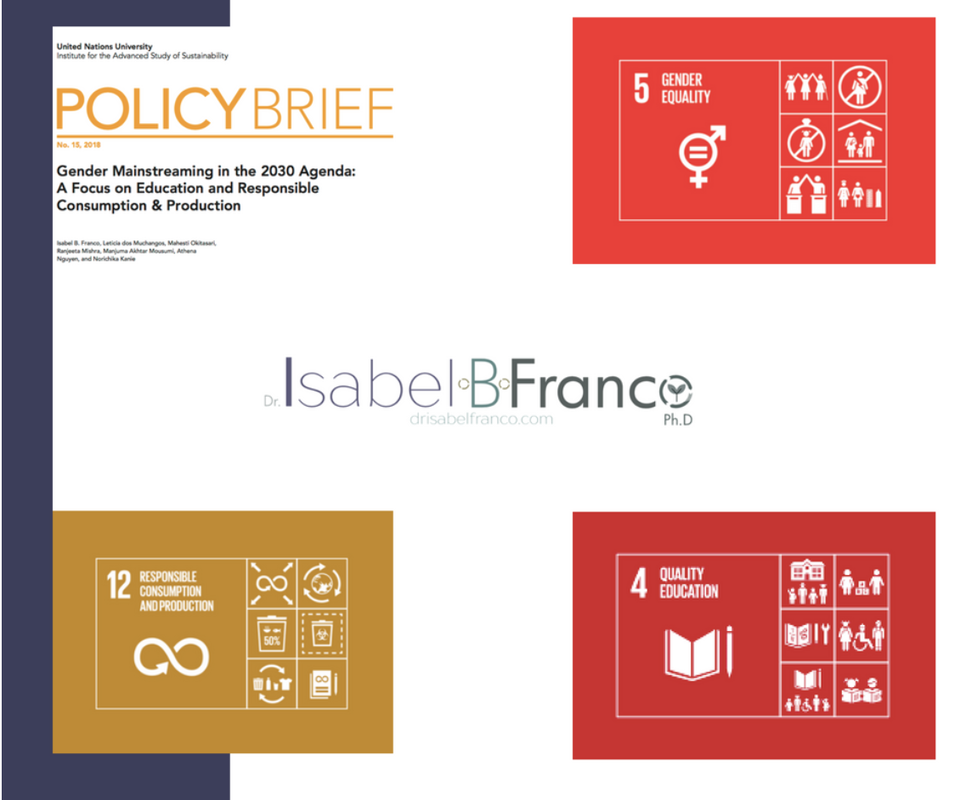
Impact: A major achievement was the publication of the UNU-IAS Policy Brief that explores the gender mainstreaming needed to achieve the Sustainable Development Goals, with a specific emphasis on education (SDG 4) and responsible consumption and production (SDG 12).
‘The policy brief titled Gender Mainstreaming in the 2030 Agenda: A Focus on Education and Responsible Consumption & Production was co-authored by UNU-IAS researchers Isabel Franco, Leticia dos Muchangos, Mahesti Okitasari, Ranjeeta Mishra, and Norichika Kanie, along with three external collaborators. It delves into the differing yet intersecting challenges across the SDGs to realizing SDG 5 (gender equality) and offers guidance on a way forward’.
The policy brief can be downloaded here:
Gender Mainstreaming in the 2030 Agenda: A Focus on Education and Responsible Comsumption and Production
Participant Stakeholders:
United Nations University – Institute for the Advanced Study of Sustainability
BRAC University
Implementing the 2030 Agenda in Asia and the Pacific: Insights from Voluntary National Reviews
Japan – Asia and The Pacific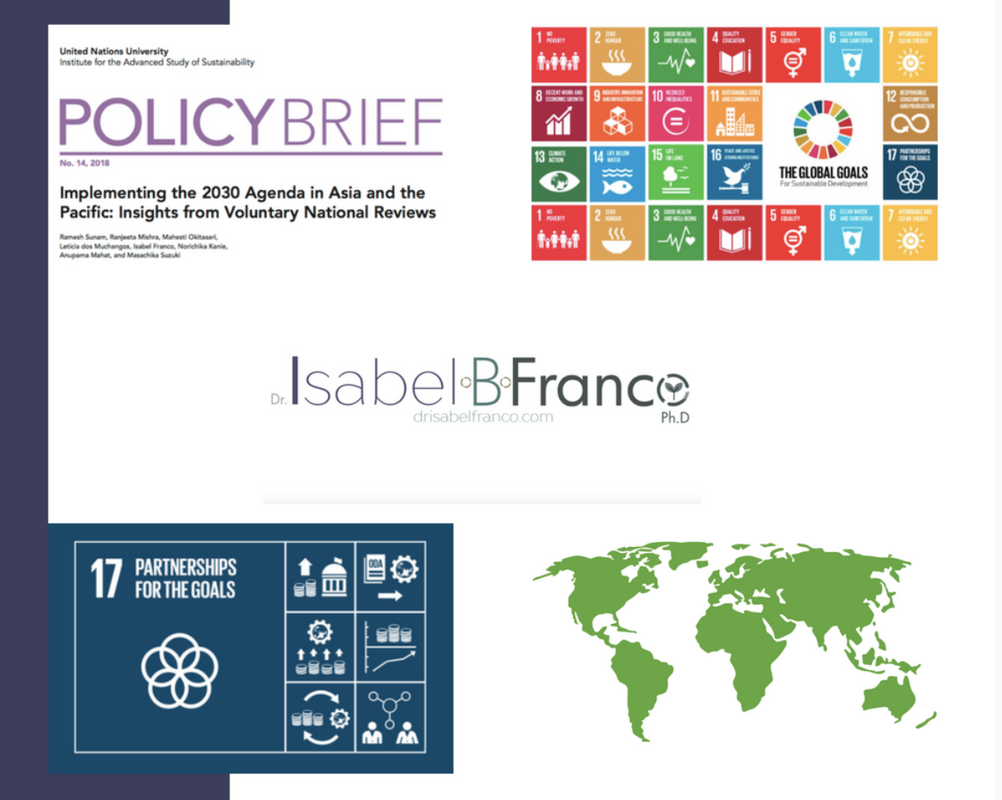
Impact: In collaboration with researchers at UNU-IAS, we published a Policy Brief that highlights the progress being made by governments in the Asia and the Pacific region to implement the 2030 Agenda while providing recommendations to further strengthen the mainstreaming of Sustainable Development Goals (SDGs) into national policy processes.
‘Implementing the 2030 Agenda in Asia and the Pacific: Insights from Voluntary National Reviews was co-authored by UNU-IAS researchers Ramesh Sunam, Ranjeeta Mishra, Mahesti Okitasari, Leticia dos Muchangos, Isabel Franco, and Norichika Kanie, along with two external collaborators. It identifies initial governance challenges through a survey of Voluntary National Reviews (VNRs) and offers guidance for national governments on developing inclusive governance structures and fostering stronger localisation efforts to achieve the SDGs’. Download the policy brief in the link below:
Implementing the 2030 Agenda in Asian and the Pacific: Insights from the Voluntary National Reviews
Participant Stakeholders:
United Nations University – Institute for the Advanced Study of Sustainability
Sophia University
Dr. Isabel B. Franco, Awarded Exceptional Woman of Excellence 2018
New Delhi, India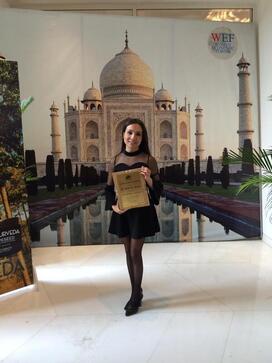
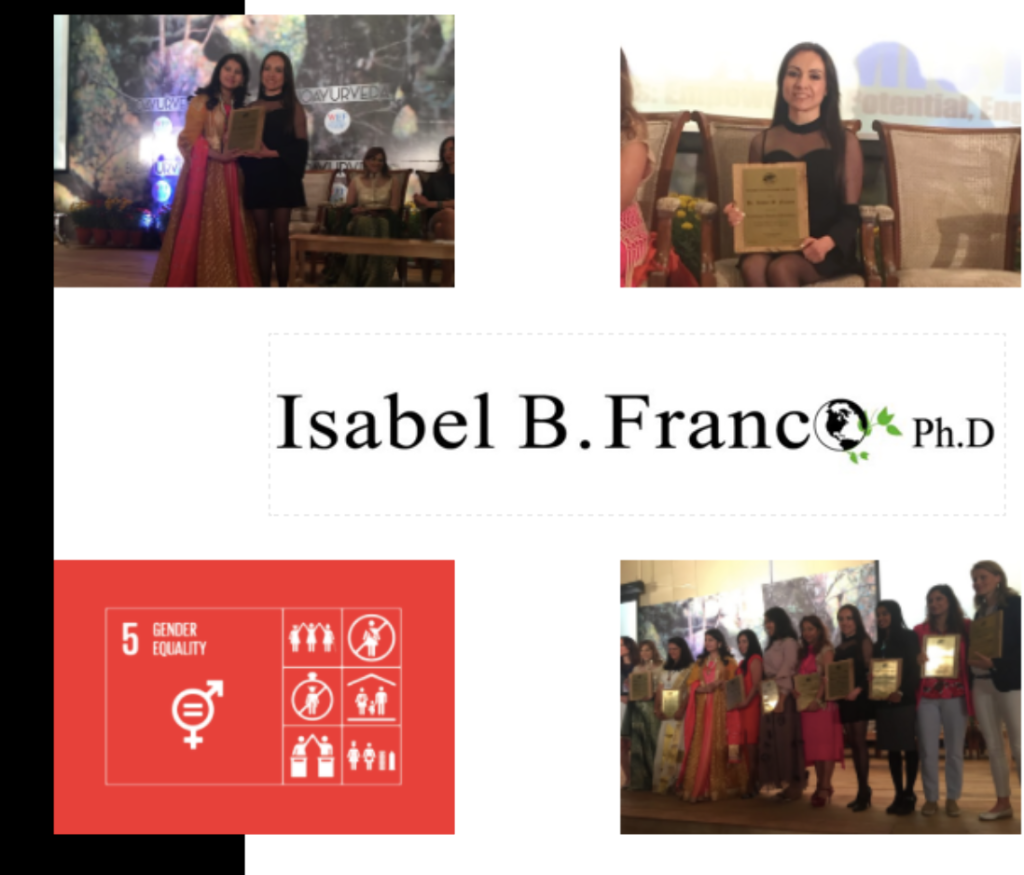
Impact: How can stakeholders promote exceptional women of excellence? I am humble that I have received the award for Exceptional Woman of Excellence 2018 at the Women Economic Forum in Delhi, India. The Forum is the largest global gathering of women entrepreneurs and leaders worldwide. I was awarded for my leadership at Exceptional Women in Sustainability (eWisely). Click on the link below to watch the talk during the Award Ceremony.
Video: How can stakeholders promote exceptional women of excellence?
Participant Stakeholders:
UNU-IAS, United Nations University – Institute for the Advanced Study of Sustainability
Women Economic Forum
Exceptional Women in Sustainability (eWisely)
How can corporations produce wisely and sustainably?
Talk at the Women Economic Forum · Delhi, India
Impact: How can corporations produce wisely and sustainably? I gave a lecture at the Women Economic Forum on how corporations could engage in socially responsible business practices to produce sustainably and foster overall sustainability. Click on the link below to watch the talk during the Award Ceremony. Key impact sustainability lessons are as follows:
– Integrate sustainability practices into corporate strategy and policy, such as corporate social responsibility, social enterprise development and socially responsible investment.
– Make use of drivers to promote sustainability such as stakeholder engagement, use of technology, government support and innovation
-Create sustainable value for external stakeholders, particularly for underrepresented stakeholders such as women and girls
Video: How can corporations produce wisely and sustainably?
Participant Stakeholders:
UNU-IAS, United Nations University – Institute for the Advanced Study of Sustainability
Women Economic Forum
Exceptional Women in Sustainability (eWisely)
Global Environmental Forum: Global Trends in Higher Education for Sustainable Development
Meiji Gakuin University · Tokyo, Japan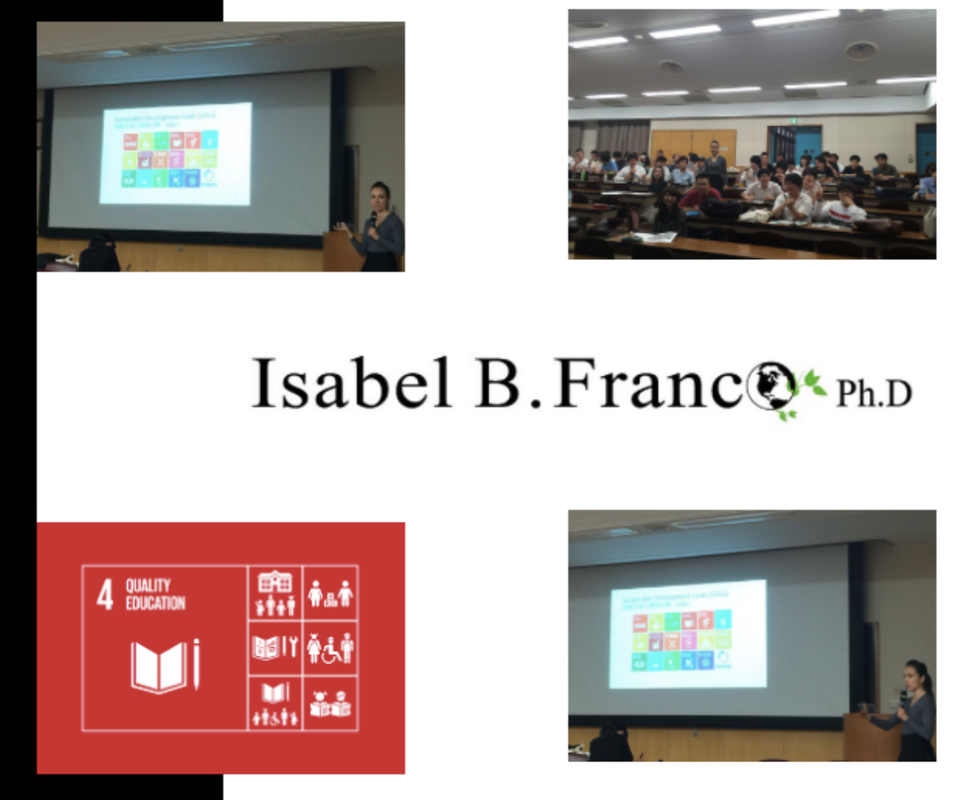
Impact: Why sustainability matters for lawyers? I was invited by the Global Environmental Forum to give a lecture to law graduate students at Meiji Gakuin University. The lecture aimed to build capacity on future lawyers on existing sustainability regulatory frameworks and trends in higher education for sustainable development. Key impact sustainability lessons are as follows:
– Lawyers need to further build their capacity on sustainability regulatory frameworks and be able to apply those in practice
– Higher education institutions should integrate a sustainability component in existing curriculums to educate future leaders with ethical and environmental values
– Sustainable Development 10 (SDG 10): reduced inequalities should be considered as a high priority in higher education agenda for sustainable development
Participant Stakeholders:
United Nations University – Institute for the Advanced Study of Sustainability
Global Environmental Forum
Meiji Gakuin University
Equal Rights Ensure a Strong Society
Gender Aspects of Sustainable Development in Bangladesh · Bangladesh, Asia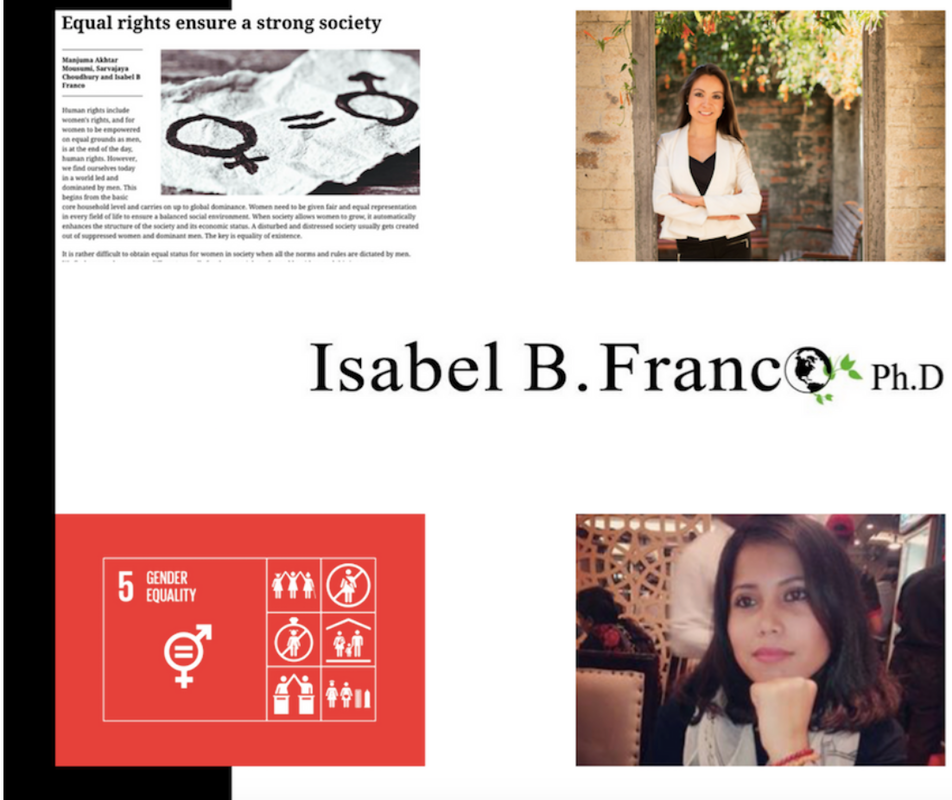
Impact: It is us, women, who need to break the stereotypes and invest wisely in ourselves to unleash our highest potential and get off the women empowerment bandwagon to bring about real gender equality’.
We are pleased to announce the publication of our latest opinion piece ‘Equal Rights Ensure a Strong Society’ under Research #eWisely Leadership. The piece published in Bangladesh local press can be read clicking the link below:
Equal rights Ensure a Strong Society
Participants Stakeholders:
Isabel B. Franco, United Nations University- Institute for the Advanced Study of Sustainability (UNU-IAS); Founder at eWisely – Women Sustainability Leadership eForum
Majuma Akhtar, Ph.D, BRAC University, Bangladesh; Research Advisor and Leader at eWisely Bangladesh
Sarvajaya Choudhury, eWisely Bangladesh
Asian and Pacific Conference on Gender Equality and Women's Empowerment
Bangkok, ThailandImpact: I participated in the Asian and Pacific Conference on Gender Equality and Women’s Empowerment held in Bangkok, Thailand. This event occurred during my time as an international consultant for the Business and Innovation Division at the United Nations Economic and Social Commission for Asia-Pacific
Participants Stakeholders:
Isabel B. Franco, International Consultant, United Nations Economic and Social Commission for Asia-Pacific (UN ESCAP)
UN WOMEN
The Americas
Conexión Sur Sur, Avances y Retos de la Agenda de Recuperación Transformadora en América Latina”
Brazil – ColombiaImpact: I was invited as a guest speaker at the Fundacao Getulio Vargas, Brazil. Under the program South-South Connection, my presentation explored the advances and challenges towards the transformation of Colombia in relation to sustainable resource development.
Stakeholders & Collaborators:
- Fundacao Getulio Vargas
- Australian Institute for Business and Economics, The University of Queensland
Sustainability Symposium
Lessons Learned from Australia and Latin America on Actioning the SDGs · Latin AmericaImpact: I moderated a discussion panel at the inaugural Australia-Latin American Sustainability Symposium organised by The University of Queensland, Australia and and the Australia-Latin America Business Council (ALABC). This is the first inaugural iteration of the Sustainability Symposium.
The event sought to bring together the resource industry (Orica, Newcrest, BHP, MMG, diplomats, professionals, policymakers, and students to discuss the role of the resource sector in achieving the Sustainable development Goals.
Stakeholders & Collaborators:
- BHP
- ORICA
- Newcrest
- MMG
- Australian Institute for Business and Economics
- Australia – Latin America Business Council
Outcome: a policy brief with the highlights of the event can be downloaded from the link below:
Policy brief franco et al alabcPDF, 883 kb
Sustainable Investing
United States of AmericaImpact: I was speaking at a conference on sustainable investment organized at Brown University. This is the second annual iteration of the Future of Sustainable Investing conference.
The event sought to bring together academics, industry professionals, policymakers, and students to discuss how the capital markets can be leveraged for sustainable development. I participated in a panel discussing ESG data and disclosure, impact investment, among others.
Stakeholders & Collaborators:
- Brown University
- International Finance Corporation
- AxA Sustainability Group
- Australian Institute for Business and Economics
ESG Indicators in the Andean Region
The Role of the Extractive Industry · South AmericaImpact: In collaboration with colleagues from the extractive industry in the Andean region, we discussed ESG issues, the role of the industry in performing against ESG indicators and metrics to measure the impact of mining operations.
Stakeholders & Collaborators:
- Los Cerros
- Australia – Latin America Business Council
- Australian Institute for Business and Economics
Land Restoration for Achieving the Sustainable Development Goal 16
United States of AmericaImpact: Our latest UN policy-relevant research piece on Land Restoration for Achieving the Sustainable Development Goal SDG16 has been released. We are pleased to have contributed to the United Nations International Resource Panel Report ‘Land Restoration for Achieving the Sustainable Development Goals’. The Report was recently presented at the UNCCD COP14 in New Delhi, India.
In collaboration with Prof. @Saleem Ali from the University of Delaware (U.S.A), we recommend that ‘disputes over land need to be adjudicated fairly so that a respect for the judicial process can also prevent conflict escalation. Land restoration also provides an opportunity to “enlarge the pie” for dispute resolution pathways and possible solutions out of intractable conflict’.
Stakeholders & Collaborators:
- United Nations International Resource Panel
- University of Delaware
- United Nations University
Outcome: The full report can be retrieved from the link below. Our contribution can be found on pages 111-115.
https://www.resourcepanel.org/…/land-restoration-achieving-
Gender Inclusion in the Mining Industry: The Chilean Case through Global/Local Gender Lens
SDGs: 5 Gender Equality, SDG 8 Decent Work and Economic Growth · Chile · Latin America and The CaribbeanImpact: In collaboration with colleagues from Universidad Catolica del Norte in Chile, we recently published our research ‘Sustainable Gender Inclusion in the Mining Industry: The Chilean Case through Global/Local Gender Lens’. Our research links to SDG 5 (Gender Equality) and SDG 8 (Decent Work and Economic Growth). Based on a case study methodology and discourse analysis, the study involved industry leaders, women in mining in Chile, civil society organisations, academia and policy makers. Findings show that higher education institutions are accountable for enhancing women’s soft skills such as, adaptability, strategy, leadership, team work, etc. However, a major problem confronting the industry is the lack of corporate and government policies that allow women to be included in male-dominated environments at early stages of their career. Findings can be applied to other mining context in Latin America or elsewhere.
Research outputs were published in Spanish in the book Development and Underdevelopment in Chile published by Universidad Catolica del Norte in Antofagasta, Chile. Email mefor a copy of this research output.
Stakeholders & Collaborators:
Universidad Catolica del Norte in Antofagasta, Chile
United Nations University: Institute for the Advanced Study of Sustainability
It's not just a Women's Issue
Women in Unconventional Fields: The Latin American Case · Latin America and The CaribbeanImpact: Based on scientific research, the video-documentary ‘Sustainable Leadership: Women in Unconventional Fields: the Latin American Case’ increases our awareness of women’s challenges in unconventional fields such as the extractive industry. Some of the lessons derived from this study are as follows:
1. Gender diversity and equality are both contradictory approaches
2. Under the gender diversity equality, women are being tasked with multiple responsibility that are not adequately compensated
3. Under the gender equality paradigm, women feel pressured to behave like men to please male dominated industries.
The video was produced in Spanish with subtitles in English. The video can be watched in the link below:
Video-documentary ‘Sustainable Leadership: Women in Unconventional Fields: the Latin American Case
Stakeholders & Collaborators:
Mineros S.A
Exceptional Women in Sustainability
TV Show: Women Sustaining our World!
Honduras · Latin America and the CaribbeanImpact: I was fortunate to connect with Exceptional Women in Sustainability from Honduras (eWiselyHonduras). Learn about the story of a woman entrepreneur from Honduras who is transforming the lives of humble communities in her country. Through sustainable coffee production, Mayra Ollenera-Powell, the Founder of Catracha Coffee Co empowers hundreds of women and builds resilient communities in rural Honduras.
Watch the TV Show to Mayra here
Connect with eWisely Honduras here
Learn more about the interlinkages between SDG 5 Gender Equality and SDG 12 Sustainable Consumption and Production in our latest policy brief in collaboration with colleagues at the United Nations University – Institute for the Advanced Study of Sustainability. Download policy brief here
Stakeholders & Collaborators:
Catracha Coffee Co
The Latin American Forum
Lima, Peru · Latin America and the Caribbean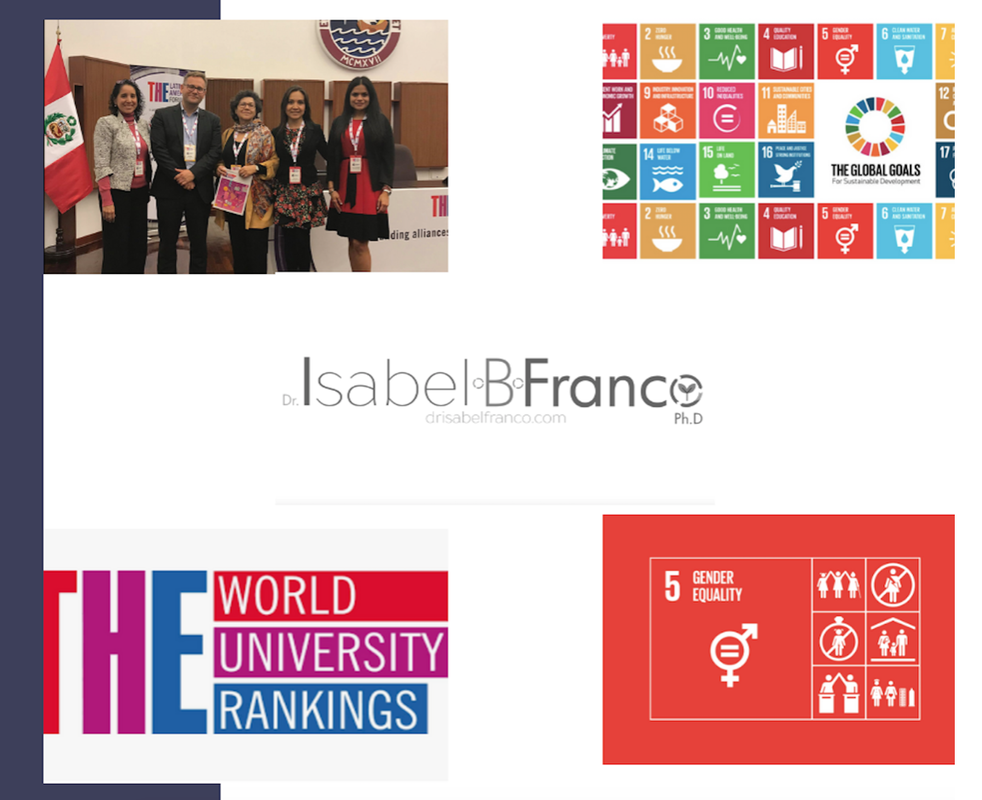
Impact: I participated in a vibrant discussion on how universities in Latin America and the Caribbean can better action and localise the Sustainable Development Goals (SDGs). The World University Rankings were also presented at THE LATIN AMERICAN FORUM held in Lima, Peru.
Stakeholders & Collaborators:
University of Piuna, Peru
The Times
The Latin American Forum
Pontificia Universidad Católica del Peru
Universidad de Monterrey
United Nations University: Institute for the Advanced Study of Sustainability
Exceptional Women in Sustainability Forum
Medellin, Colombia · Latin America and the CaribbeanImpact: At the global level, there has been a rapid development of the extractive industry (mining, oil and gas), compromising human capital in the regions where it operates, particularly that of women. In this context, the Forum explored the links between the extractive industry and opportunities for the sustainable human capital development of women in the extractive industry. The absence of an approach for the attraction, retention and sustainable development of women in the extractive industry, in the current scenario is not only causing productivity losses in extractive companies, but also puts at risk regional sustainability.
In this context, the objective of the Forum was to carry out an informative / consultative process to explore opportunities for attraction and sustainable human capital development of women in the extractive industry (mining, oil and gas) at the local and global levels. It also sought to generate recommendations aimed at creating social and corporate sustainability approaches that generate added value for various stakeholders, namely, industry, women in mining, oil and gas, governments and civil society. Some of the topics covered by the Forum were, among others:
1. Sustainable human. capital development of women in industry: A new approach to corporate social sustainability
2. Attraction and retention of women in the extractive industry
3. Women in mining, oil and gas: An emerging global approach to social license in the extractive industry
Stakeholders & Collaborators:
- eWisely Colombia
- Mujeres en minería, petróleo y gas de las empresas Cerromatoso, Continentalgold, Minería Texas Colombia y Orica.
- Mineros S.A
- Facultad de Minas, Universidad Nacional de Colombia
- Investigadores Académicos de las Universidades de Queensland Australia, Córdoba, Universidad Pedagógica y Tecnológica de Colombia (UPTC)
- Representantes del Gobierno nacional de la Dirección de Minería Empresarial del Ministerio de Minas y Energía.
- Representantes de la sociedad civil
Outcome: Forum’s Report is available in the link below
Women Sustainability Forum Colombia ReportPDF, 8927 kb
Sustainable Community Development in Post-conflict Resource Regions – Fieldwork
Muzo Boyaca, Colombia · Latin America and the CaribbeanImpact: My research in sustainable resource development took me to the region of Muzo in Boyacá, Colombia, where I conducted field research for the Center of Excellence in Mining, an initiative led by the Australian Government headed by The University of Queensland. Together with Prof. Oliveira from Brasil, we collected data from local communities in regards to mining as a driver of local development. We heard firsthand stories from artisanal miners, female community leaders and professional women miners in the emerald mine site of Puerto Arturo in Muzo, Boyacá.
Stakeholders & Collaborators:
- The University of Queensland
- Government of Muzo
- Fundacao Getulio Vargas
- Universidad de los Andes
Sustainable Community Development in Post-conflict Resource Regions – Consultation Workshop
Bogota, Colombia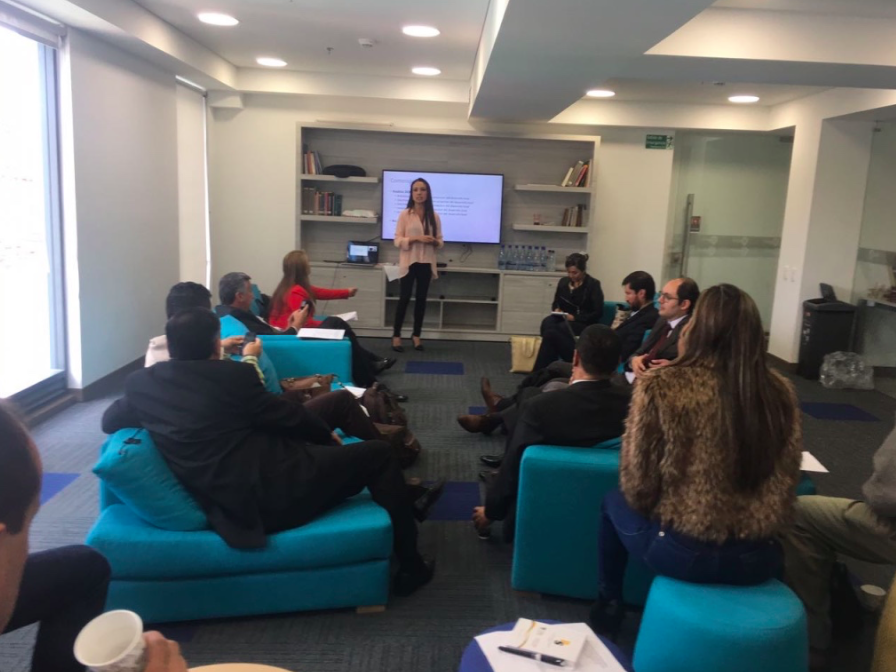
Impact: After extensive fieldwork with local communities in Muzo, Boyaca, I co-organised the consultation workshop with Senior Executives at the corporate and government levels in Bogota, Colombia. The consultation aimed to contrast community perceptions against stakeholders’ perceptions at the local and national levels of governance on sustainable resource development in the emerald mining industry. The Centre of Excellence in Mining is an initiative led by the Australian Government headed by The University of Queensland.
Stakeholders & Collaborators:
- The University of Queensland
- Ministry of Mines of Colombia
- Mining Texas Colombia
- Fundacao Getulio Vargas
- Universidad de los Andes
Exceptional Women in Sustainability Forum
Antofagasta, Chile · Latin America and the CaribbeanImpact: The Forum was able to convene participants from various interest groups (private sector, government, academia and civil society). The first part of the event was held in a chair format, while in the second part evolved into a consultation workshop. The findings of the workshop allowed us to respond in a preliminary way to the problems related to sustainable human capital development, attraction and retention of women in the extractive industry. The contribution of the participants allowed us to better understand the opportunities and challenges of the extractive industry. Findings recommended effective collaboration processes to leverage the role of women as an axis central to the sustainable regional development.
Stakeholders & Collaborators:
- eWisely Chile
- Women in the mining Chile, WIM Chile
- Academic Researchers of the Mining Business School of the Universidad Católica del Norte
- Representatives of the local government
- Plataforma Norte Consultants
- Representatives of civil society
Outcome: Forum’s Report is available in the link below
TV Show: Exceptional Women in Sustainability
ODS 5 – Igualdad de Género e Integración Sustentable de las Mujeres en la Industria Minera: El Caso Chileno desde una Perspectiva de Género Global/Local’ · Antofagasta, Chile · Latin America and the CaribbeanImpacto: TV SHOW (en español únicamente)
ODS 5 – Igualdad de Género e Integración Sustentable de las Mujeres en la Industria Minera: El Caso Chileno desde una Perspectiva de Género Global/Local’
El TV show presenta hallazgos investigativos de un estudio que involucró varios grupos de interés en la industria extractiva y la exploración de prácticas globales en África y Asia-Pacífico acerca de la integración de la mujer en el sector. Soportado en una exploración detallada del contexto Chileno, los hallazgos más significativos muestran que:
– Chile, un país con un potencial minero de cobre de un 29,2% (a la fecha de realización del estudio), tiene sólo un 7,5% de recurso humano femenino, que comparado con otros casos como el Australiano, es cerca de la mitad.
– El estudio también mostró que sólo un 4,3% de los matriculados en carreras técnicas relacionadas con la minería, son mujeres.
– Asimismo, encontramos fuertes estereotipos de género, acoso y altos niveles de deserción de mujeres una vez son madres.
– Las leyes laborales, al igual que en el caso Africano (explorado también en este estudio), no son suficientemente flexibles para facilitar la participación de las mujeres en la industria, perpetuando prácticas desiguales en un sector que require de capital humano capacitado.
– Nuestro estudio propone un enfoque de sustentabilidad de género que permita responder a las necesidades de las mujeres en la industria y que involucre un componente de liderazgo, empleo, educación, innovación y emprendimiento para las mujeres en la sector y las comunidades adyacentes a proyectos mineros.
Stakeholders & Colaboradores
– Universidad Católica del Norte, Antofagasta, Chile
United Nations University – Institute for The Advanced Study of Sustainability
– eWisely Antofagasta
Outcome: A copy of the final research outcome can be requested at by email
TV Show: Exceptional Women in Sustainability
Mujeres Investigadoras en América Latina y el alcance de los ODS · Lima, Peru · Latin America and the CaribbeanImpacto: Mujeres Investigadoras en América Latina y el alcance de los ODS (en español únicamente).
En este TV show comparto casos de mujeres investigadoras en América Latina y el Caribe que exploran el alcance de los Objetivos del Desarrollo Sostenible (ODS) con perspectiva de género. El documental corto se realizó en el marco del THE LATIN AMERICAN FORUM llevado a cabo en Lima Perú. El video show muestra las áreas prioritarias para las mujeres en el alcance de la Agenda 2030 en conexión con los ODS10 Reducción de las Desigualdades, ODS11, Comunidades y Ciudades Sostenibles, ODS5, Igualdad de Género, ODS8 Trabajo Decente y Crecimiento Económico y ODS 4 Educación de Calidad.
Stakeholders & Colaboradores:
- Universidad Nacional de Piura, Peru
- Universidad de las Naciones Unidas – Institute for the Advanced Study of Sustainability
- Universidad Iberoamericana
- Pontificia Universidad Católica del Peru
TV Show: Exceptional Women in Sustainability
Guest: Omaira Orelana-Powell · Honduras&Topic: SDG 11 and Empowering Women and Building Resilient Communities through Sustainable Coffee Production
Impact: Women Sustaining our World!
Learn about the story of a woman entrepreneur from Honduras who is transforming the lives of humble communities in her country. Mayra Ollenera-Powell, the Founder of Catracha Coffee Co empowers hundreds of women and contributes to build sustainable communities in rural Honduras through sustainable coffee production.
Stakeholders & Collaborators
– Exceptional Women in Sustainability Honduras – eWiselyHonduras
– Catracha Coffee Co
Radio Show: Exceptional Women in Sustainability
Guest: Pamela Gallo, eWisely Santiago · Santiago, ChileTema: ODS 10 y reducción de las desigualdades en comunidades vulnerables en Chile
Impacto: En este episodio conectamos con una mujer excepcional en sostenibilidad, Pamela Gallo, líder para eWisely Santiago (Exceptional Women in Sustainability Santiago). Pamela narra su historia de emprendimiento social sostenible en el contexto Chileno a través de la Fundación Personas a la Obra y el el alcance del Objetivo del Desarrollo 10 (Reducción de las Desigualdades)
Stakeholders y Colaboradores:
- Pamela, Gallo, eWisely Santiago y Personas a la Obra
TV Show: Exceptional Women in Sustainability
Guest: Tatiana Garcia, eWisely España · Madrid, EspanaTema: Acerca de la localización de los ODS y los retos de las mujeres en sostenibilidad
Impacto: En este episodio (en español) compartimos un eCafe con Tatiana Garcia, una Mujer Excepcional en Sostenibilidad. Tatiana ha liderado temas relacionados con la localización de los Objetivos del Desarrollo Sostenible (ODS), particularmente en Medellín, Colombia. Tatiana es una mujer migrante y nos narra los retos que implica migrar y retomar el viaje hacia la sostenibilidad en contextos diferentes al país de origen. En este viaje hacia la sostenibilidad, Tatiana conecta el ODS 17 Alianzas para Lograr los Objetivos y el ODS 10 Reducción de las Desigualdades.
Stakeholders & Collaborators
– Tatiana Garcia, eWisely España
Radio Show: Exceptional Women in Sustainability
Guest: Monica Alonso, eWisely Paraguay · ParaguayTema: ODS 10 y reducción de las desigualdades en comunidades vulnerables en Chile
Impacto: En esta episodio (en español ) celebramos el comienzo del conector eWisely Paraguay y con motivo de esta celebración, en el Radio Show de esta semana, compartiremos un eCafe con Mónica Alonso, líder de ‘Exceptional Women in Sustainability Paraguay (eWiselyParaguay)’. Madre de 4 hijos y profesional en sostenibilidad, Mónica nos narra su trayectoria conectándo los ODS 8 Empleo Digno y Crecimiento Económico, ODS 15 Flora y Fauna Terrestres y ODS 17 Alianzas para el logro de los objetivos.
Ella también nos dará recomendaciones acerca de como equilibrar familia-trabajo y hace un llamado a otras mujeres en sostenibilidad a no ser las boicoteadoras de sus propios sueños. Felicidades a Mónica por posicionarse como embajadora de las mujeres Paraguayas en el conector de mujeres excepcionales en sostenibilidad de mayor impacto, con cerca de +60 conectores globales y +8,000 seguidores y líderes en el mundo.
Stakeholders & Colaboradores:
- Monica Alonso, eWisely Paraguay
TV Show: Exceptional Women in Sustainability
Guest: Natalia Cano, eWisely Colombia · ColombiaTema: Acerca de Mujeres Científicas en Sostenibilidad
Impacto: Este episodio conmemora el día de las mujeres científicas, y con motivo de esta celebración, en este episodio de eWisely TV Show compartiremos un eCafe con una de las líderes para ‘Exceptional Women in Sustainability Colombia (eWisely, Colombia)’ quien a través del conector eWisely, logró realizar su estancia de investigación en Australia en el último semestre de su Doctorado. Natalia nos da tips acerca de como aprovechar el potencial del conector eWisely. El conector de mujeres en política, profesionales y científicas en sostenibilidad, con cerca de +60 conectores globales y +8,000 seguidores y líderes en el mundo. Felicidades a todas las mujeres científicas en sostenibilidad en eWisely. Este episodio conecta ODS9, ODS17 y ODS5
Stakeholders & Collaborators
– Natalia Cano, eWisely Colombia
Pioneering Women in Mining Latin America: “Integrating a Gender Lens into the Industry”
ChileTopic: Women in Mining Latin America
Impact: On April 12th 2014, eWisely launched ‘Women in Mining and Resources in Latin America (WIMLATAM) Project’. The launch led to the first round of workshops “Integrating a Gender Lens into the Industry”. eWisely and WIMLATAM are initiatives I have pioneered in collaboration with colleagues. WIMLATAM workshops aimed to provide participants with practical recommendations, as follows:
- Gender and Diversity in the work place
- The social impact of gender
- A gendered approach to participation
Throughout the workshop, we had the support of the International Mining for Development Centre, the Observatory for Gender and Equality, the Instituto Nacional de Normalización and Mujer Opina. The event was attended by representatives from the mining industry (AngloAmericanChile), foundations (Fundacion Los Pelambres), consulting (Crecer Consultores, Gestion Social) and academia.
Stakeholders & Collaborators
– International Mining for Development Centre
– eWisely (Exceptional Women in Sustainability), WIMLATAM (Women in Mining & Resources Latin America)
– The Observatory for Gender and Equality
– Instituto Nacional de Normalización
– Mujer Opina
– Anglo American Chile
– Fundacion Los Pelambres
– Crecer Consultores
– Gestion Social
– Academics
Radio Show: Marielena Lucen, Peruvian Government
Exceptional Woman in Sustainability, Peru (eWisely Peru) · Peru
Impact: Welcome to the Sustainoleadership Podcast Series: where sustainoleaders connect and share leadership stories and challenges in their journey towards a Sustainable Future! This month, our guest is Marialena Lucen with extensive global experience governance in extractive industries. Marialena works for the Peruvian Govrnment and is a former leader eWisely Peru. In this episode (supported by eWisely, Marialena reminds us of the importance of acknowledging the sustainable leadership of women in male dominated industries such as mining. Please find the podcast in Spanish in the link below. Interested in being featured as the next sustainoleader? Please send us an email to connect@drisabelfranco.com
Podcast: ‘Es importante reconocer el rol de la mujer en la industria minera’ ( ‘It is important to acknowledge the role of women in mining’)
Stakeholders & Collaborators
– eWisely (Exceptional Women in Sustainability)
– Peruvian Government
Guest Lecturer on Sustainable Mining
Universidad Nacional Autónoma de México (UNAM) · Mexico City, MexicoImpact: I was invited by the Universidad Nacional Autónoma de México (UNAM) to deliver a guest lecture on sustainable mining.
Stakeholders & Collaborators:
- Universidad Nacional Autónoma de México (UNAM)
Guest Lecturer on Sustainable Resource Development
School of Mines, Universidad Nacional de Colombia · Medellin, ColombiaImpact: I was invited as a guest lecturer at the School of Mines, Universidad Nacional de Colombia to teach Master students on sustainable resource development. Participant students engaged in practical applications of tools and models to sustainability in mining resource regions of Colombia.
Stakeholders & Collaborators
– School of Mines, Universidad Nacional de Colombia
– The University of Queensland, Australia
Fieldwork on Sustainable Resource Development
Segovia, ColombiaImpact: I conducted fieldwork in Segovia, Colombia on sustainable resource development. During my field trip I also engaged with women entrepreneurs and former women miners who have been able to obtain sustainable outcomes out of the resource boom, in a male-dominated community.
Stakeholders & Collaborators
– The University of Queensland, Australia
– International Mining for Development Centre
– State Government of Antioquia
– Local Government of Segovia
– Continental Gold Mining Company
Seminar and Consultation Workshop on Planning for Mining Regions
Risaralda, Colombia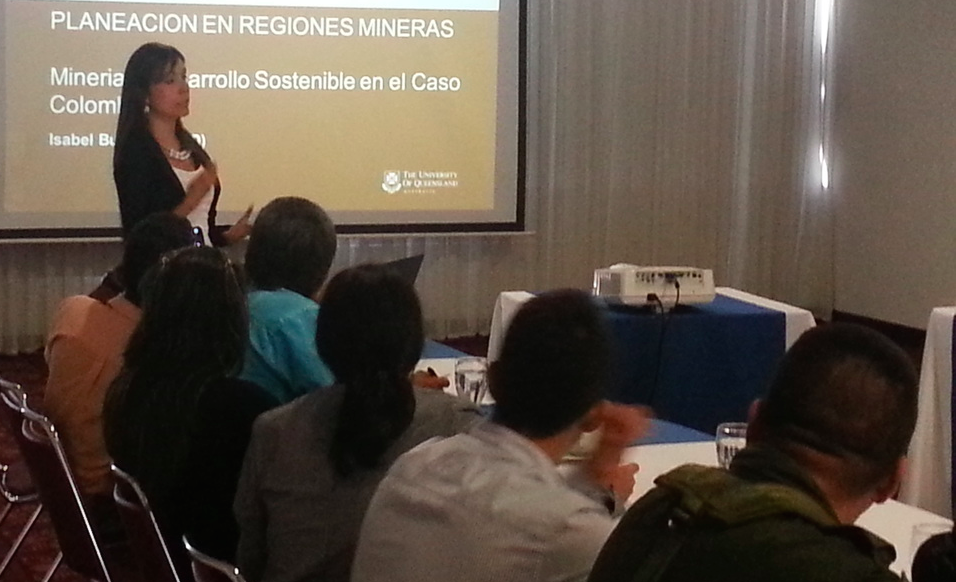
Impact: I led a consultation workshop with stakeholders in involved in mining and exploration projects in Risaralda, Colombia. Participants discussed and came up with agreements on sustainable resource development, small-scale mining and sustainable outcomes for communities adjacent to mining operations.
Stakeholders & Collaborators
– State Government of Risaralda, Colombia
– Seafield Resources Exploration Company
– National Police of Colombia
– Community members
– The University of Queensland
Africa
Global Agenda for Sustainable Resource Development
Lusaka, Zambia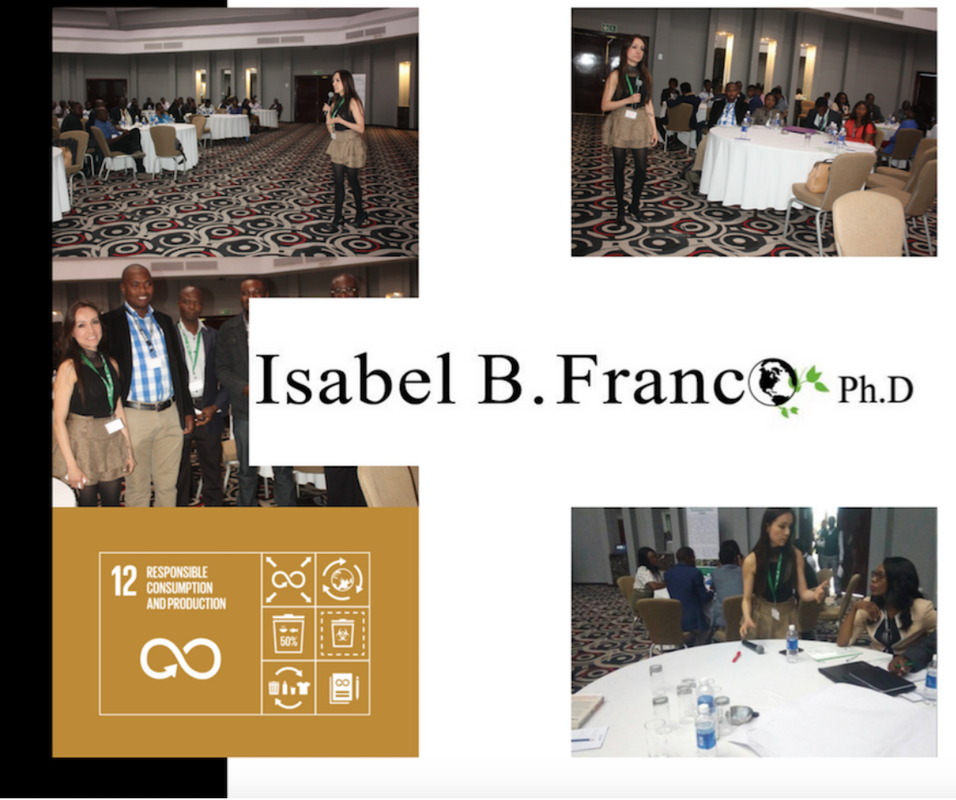
Impact: In collaboration with the School of Mines, University of Zambia, I led the consultation workshop on education for sustainable mining development. Government, corporate representatives, academia and CBOs participated in the lecture and consultation workshop (UNU-ESD Africa for Sustainable Mining). The workshop aimed to share best practices on education and capacity-building for Sustainable Mining. Lessons to be learned from the Zambian case:
1. Effective Multi-stakeholder collaboration for sustainable mining development is paramount
2. Building capacity at the corporate sector on sustainability performance and reporting
3. There is a need to translated science into impact to assist communities adjacent to mining operations in forging more sustainable livelihood options (academia-industry collaboration)
4. Fostering the alignment of national governance frameworks with the African Mining Vision, continental policy for sustainable mining development
5. Building capacity on and empowering women to cope with adverse mining impacts, particularly those whose only livelihood option is artisanal and small scale mining
Participant Stakeholders & Collaborators
- UNU-IAS, United Nations University – Institute for the Advanced Study of Sustainability, Japan and the Sustainable Minerals Institute, The University of Queensland, Australia
- School of Mines, The University of Zambia
- United Nations University, ESDA Program
Outcome: This research collaboration led to the publication of the scientific output:
Mutale, I., Franco I., Masinja, I (2019) (accepted). Corporate Sustainability Performance: An Approach to Effective Sustainable Development or Not? A Case Study of Luanshya Copper Mine in Zambia. Sustainability.
The African Mining Vision: Sustainability in Mining in Angola
Angola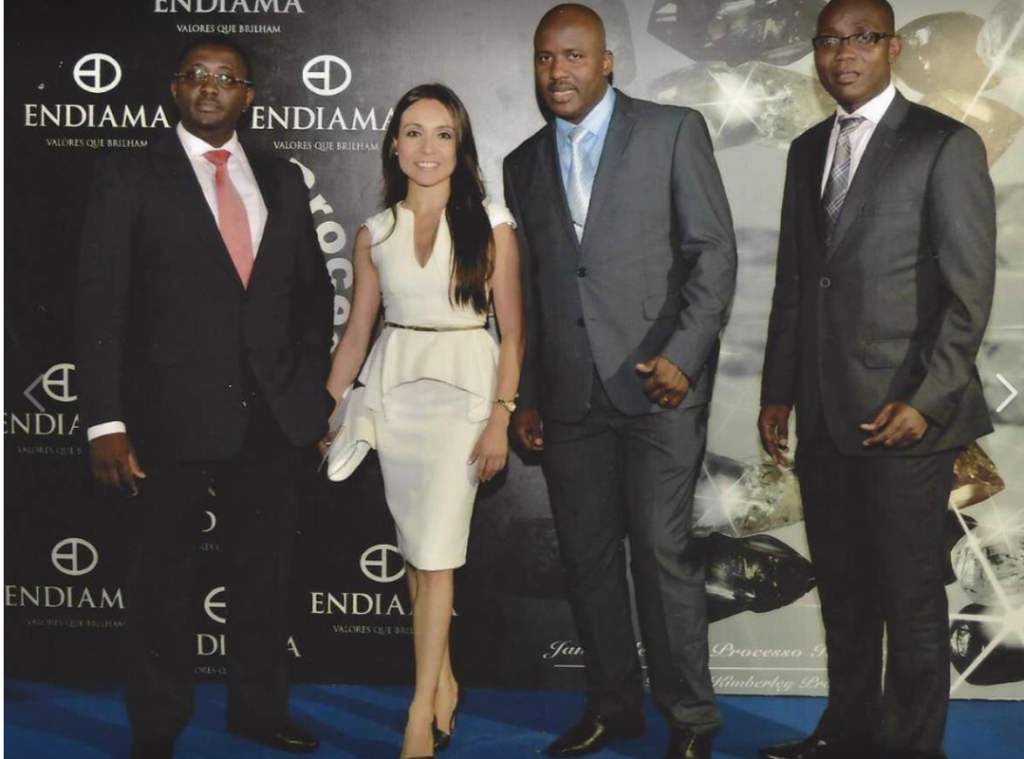
Impact: I was appointed by the UNDP Angola to develop the alignment of the Angola Extractive Industry with the African Mining Vision. During the lenght of the project I liaised with government, corporate and community stakeholders to agree on a vision for sustainability in mining over the next 25-30 years. Final project’s outcomes were shared with the Minister of Mines and Geology of Angola and his Cabinet.
Participant stakeholders & Collaborators:
United Nations Development Programme
Ministry of Geology and Mines of Angola
CATOCA Dimond Mining Company
Endiama (National Dimond Company of Angola)
University Agostino Neto,
Local Communities at Lundas (adjacent to CATOCA’s mine site)
Women Sustainability Forum
Topic: Community Capacity-building for Sustainable Development · Lusaka, ZambiaImpact: There is a general concern pertaining to global sustainability research and education agendas and their real-life effectiveness for women. Yet there are many unanswered questions in this area. This Forum increased our understanding of these questions and how they can be addressed. The Forum turned into a consultation workshop aimed to discuss priority women/community capacity-building areas for education for sustainable development. It also showed that improving identified areas seems to be the most effective way to enhance the ability of local communities to cope with pressing global sustainability challenges over time. This forum paid nuance attention to the nature and importance of women capacity-building for fostering SDG 4 quality education in the pursuit of sustainable development.
Participant Stakeholders & Investors
– Japan Society for the Promotion of Science
– eWisely Zambia
– University of Zambia, School of Education
– Local Government Representatives
Outcome: Workshop’s outcomes were published in the scientific journal article: Franco, I and Tracey, J (2019) (accepted). Community Capacity-building for Sustainable Development: Effectively Striving towards Achieving Local Community Sustainability Targets. International Journal of Sustainability in Higher Education.
Radio Show: Connecting Leaders for a Sustainable Future
Guest: George Lwanda, United Nations Development Programme · EthiopiaTopic: SDG 8 and Towards Sustainable Entrepreneurship in Resource Regions
Impact: Coming from an unprivileged background, George Lwanda is now leading pressing sustainability issues at UNDP in Africa. He tells us more about his life story and how through his work and personal experience, he has been able to create an impact and contribute to the achievement of #SDG8 Decent work and Economic Growth, particularly in relation to sustainable entrepreneurship in the context of resource regions.
Participant Stakeholders & Investors:
- George Lwanda, United Nations Development Programme
Global Agenda for Sustainable Resource Development
Lusaka, Zambia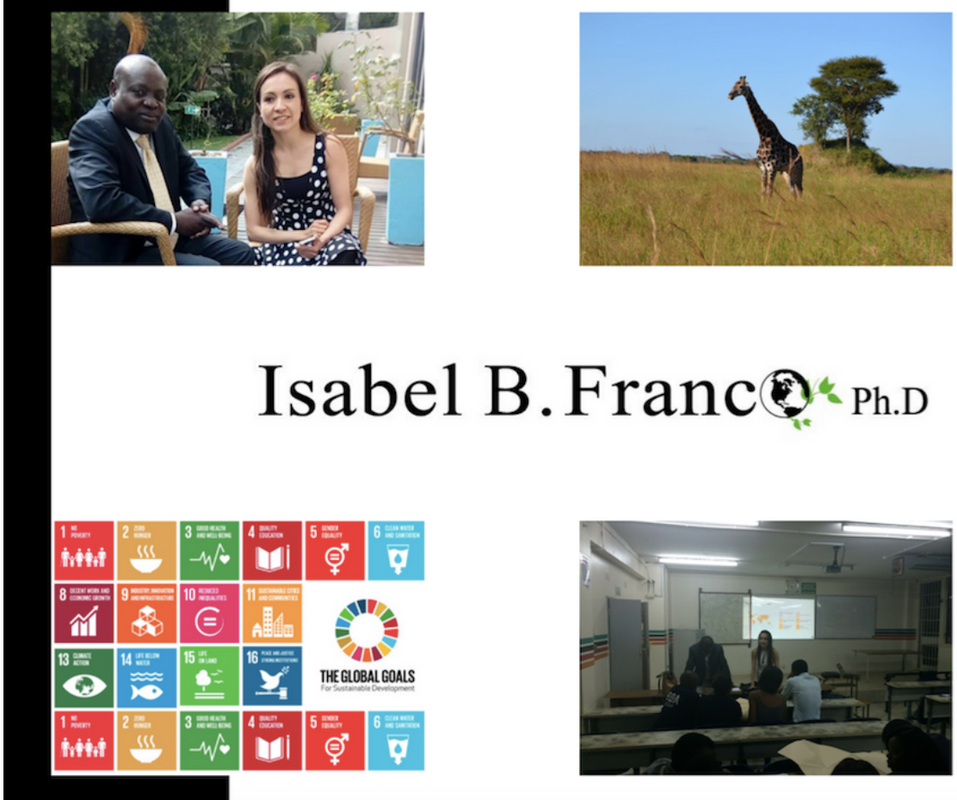
Impact: Welcome to the sustainoleadership series! Every month we will have guests sharing their successful stories and challenges in their journey towards sustainability. This month our guest is Marriot Nyangu, Executive Director at The Policy and Governance Centre Lusaka, Zambia.
Marriot is also hosting a conference in September 2018 in Lusaka, Zambia on SDGs interlinkages and is looking for collaborators. Those interested please kindly let us know. I will be happy to connect you to Marriot for a more sustainable future for all. Marriot Nyangu’s interviews and pressing sustainability challenges in Lusaka can be watched in English in the link below:
Marriot Nyangu: Sustainoleadership in Zambia
Would you like to feature in the sustainoleadership series?
Video and Podcast Format Available
Please connect through my social media channels and enquire.
Looking forward to hearing from you!
Participant Stakeholders & Collaborators
Guest: Mariot Nyangu, Executive Director at The Policy and Governance Centre, Lusaka, Zambia
Europe
Dublin City University
Irish Institute of Digital Business · Ireland
Impact: I was speaking at the ‘Business 4SDGs’ Webinar Series at Dublin City University. I discussed the role of business networks, such as the UN Global Compact in supporting the private sector towards the fostering of overall sustainability.
Stakeholders and Collaborators
– Dublin City University
– Irish Institute of Digital Business
– Australian Institute for Business and Economics (AIBE)
Research Fellow Appointment
Earth System Governance Project · The University of Utrecht · The Netherlands, Europe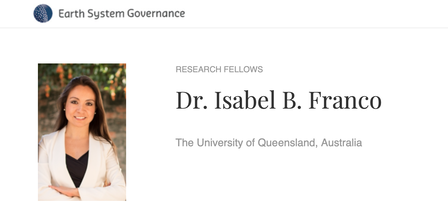
Impact: I have been appointed Research Fellow at the Earth System Governance at the University of Utrecht, The Netherlands. My appointment seeks to link my research on governance for sustainable development with the broader themes of earth system governance. Through a bottom-up, dynamic, and active network, we researchers collaborate on research, debate ideas and disseminate information on relevant events and opportunities in the field. More information about my appointment can be consulted here.
Stakeholders and Collaborators
– University of Utrecht, The Netherlands
– Earth System Governance Project
– The University of Queensland, Australia
OECD Global Forum on Socially Responsible Business
Risk Prioritisation Roundtable · Paris, FranceImpact: Beyond business as usual! This is the main lesson I learned at the Global Forum on Socially Responsible Business (SRB) 2018 organised by the OECD in Paris, France.Delegates coming from diverse locations worldwide, representing the private sector, governments, academia and civil society engaged in a vibrant discussion over the launch of the OECD Due Diligence Guidance for Responsible Conduct. I actively participated in a deep dive session on risk prioritisation. We concluded that business can go beyond business as usual if:
- They commit to integrate SRB in their DNA
- Evidence shows that companies are more capable to cope with potential risks, prevent and mitigate them successfully when following SRB procedures
- It is companies’ and governments’ responsibility to make SRB a priority
- Business compromise their reputational capital when adverse impacts on people and the environment are neglected
- Climate change and gender issues across the supply chain need to be taken seriously
SRB is about continuous improvement and there are many lessons to be learned. I encourage key stakeholders in my network to go beyond business as usual and read our latest book on SRB, in collaboration with UN colleagues. The manuscript titles ‘Socially Responsible Business: A Model for a Sustainable Future” and aims to provide practical recommendations on how to integrate SRB into the core business strategy. The manuscript can be found here.
Stakeholders and Collaborators
– OECD
– United Nations University – Institute for the Advanced Study of Sustainability
Corporate Agenda of Sustainable Development
Switzerland, France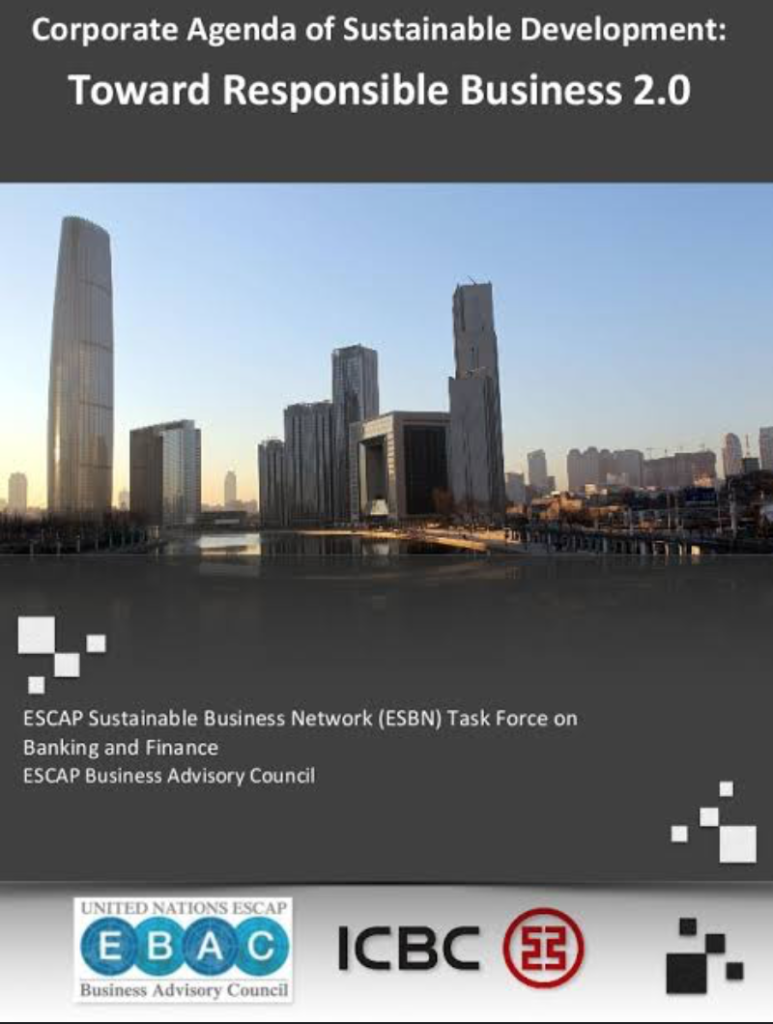
Impact: The recent financial crisis and resulting economic downturn showed the important role of the financial sector in the world economy. The banking sector does not just affect stakeholders; it affects society as a whole. Dr. Isabel Franco and colleagues collaborated towards a handbook aimed to identify best practices in responsible and sustainable banking and finance, to raise awareness and undertake policy advocacy in the area of responsible banking and finance and to serve as a too for undertaking capacity development through training and other pertinent programmes. The project was managed and delivered by Dr. Isabel B. Franco. This handbook was published by the United Nations Economic and Social Commission for Asia and the Pacific (ESCAP)
Stakeholders and Collaborators
- Natixis
- Credit Suisse Group AG
- United Nations Economic and Social Commission for Asia ad The Pacific (UNESCAP)
- ESCAP Business Advisory Council
Research Collaboration on Sustainable Fashion
Introducing Fish Skin as a Sustainable Raw Material for Fashion · England, United Kingdom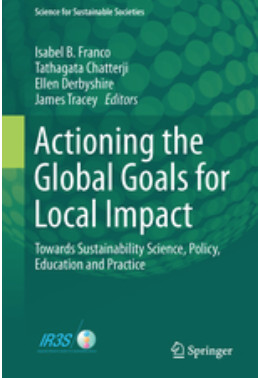
Impact: I recently engaged in research collaboration on sustainable fashion and SDG 14 Life Below Water. The collaboration with Central Saint Martins, University of the Arts, London was documented in the book ‘Actioning the Global Goals for Local Impact’. A publication I recently edited.
This investigation argues that ‘in recent years there has been a growing interest in fish skin, a by-product of the food industry, as an alternative sustainable raw material for fashion. Global production of fish has steadily increased over the last decade and more than 50% of the total remaining material from fish capture results in 32 million tonnes of waste. A substantial amount of this waste is the skin of the fish; only a small percentage of this skin is processed into leather. While, to date, the European Environment Agency allows seafood processors to dispose of fish skins in marine waters, this is expected to change as the decomposing organic waste can suck up available oxygen from marine species and introduce disease into the local ecosystem. Fish skin leather processing could prevent and significantly reduce marine pollution and sustainably protect marine ecosystems in order to achieve healthy and productive oceans. This investigation describes the conditions necessary for the development of fish skin craftsmanship within a Fashion Higher Education sustainable curriculum. In order to enhance the innovation and sustainable design of fish leather products, the author has developed an impactful capacity-building approach connecting fashion students with the Icelandic fish leather industry, which is renowned for sustainable sourcing from Nordic fish farms, promoting the sustainable use of ocean-based resources.
Stakeholders and Collaborators: Central Saint Martins, University of the Arts, London
Radio Show: Connecting Leaders for a Sustainable Future
Felix Gonzalez Yague, ACCIONA · Madrid, SpainImpacto: En este Radio Show (en español) conectamos con un líder en sostenibilidad y un invitado muy especial, Félix Gonzalez Yague. Desde España, Félix nos narra su transición personal y profesional de la industria extractiva y combustibles fósiles hacia energías renovables. Félix actualmente lidera temas de transición energética en su cargo actual en Acciona, líder global dedicado al manejo e infraestructura de energías renovables. Su trayectoria, ha logrado conectar ODS 10, 11, 12, 13, entre otros. Invito a otros líderes a compartir sus contribuciones acerca de la transición energética.
Stakeholders and Collaborators:
- Acciona
Radio Show: Connecting Leaders for a Sustainable Future
Guest: Rui Falcao · Lisbon, PortugalImpact: I connected with Rui Falcao from Portugal. Coming from a successful angel investment background, Rui is now conducting research on angel investment. He shares with us more about the interlinkages between impact investment and SDG 10 Reduced Inequalities.
Stakeholders and Collaborators:
- RED Angels Investors